What Does The Colour Of Your Poo Mean?
Last Updated: 25 June 2026
The colour of your poo can reveal important clues about your digestive health, as it reflects how food moves through the digestive system, how bile is processed and how your gut microbiome functions as part of a normal biological process [1]. Understanding stool colour is a simple yet valuable way to monitor internal health and bowel habits, as changes you notice in the toilet bowl can indicate how well your digestive system is working.
The insights in this article are provided by Vivere’s Head of Nutrition, Yusra Serdaroglu Aydin, a registered dietitian with a background in nutrition, food engineering and culinary arts. Her approach is grounded in science and shaped by a strong understanding of personalised nutrition and the human microbiome, helping to explain how stool colour links to overall wellbeing.
In One Sentence:
Poo colour can indicate how well your digestive system, liver and gut microbiome are functioning, with changes sometimes signalling diet effects or underlying health issues.
Key Takeaways
What is the normal healthy colour for poo? Medium to dark brown stool is usually normal, but stool colour alone does not confirm digestive health.
Why is my poo green? Green stool is often linked to green vegetables like spinach or rapid digestion through the gut.
When should I worry about stool colour? You should seek advice from a medical professional, such as a doctor, if you notice persistent red, black, tarry stool or clay coloured stool.
What does colour mean? Stool colour can reflect health symptoms related to digestion, bile production and nutrient absorption.
Are colour changes normal? Occasional colour changes are common, but consistent differences may indicate underlying digestive or medical concerns.
At a Glance Stool Colour Chart
Different stool colours can reflect variations in transit time, bile processing and overall digestive function.
Brown: Normal and healthy, linked to a balanced diet and proper bile processing
Green: Fast transit time or high intake of leafy foods
Yellow: Possible fat malabsorption or food intolerances such as Coeliac disease
Pale or clay coloured: Possible bile blockage, liver issues or gallbladder issues
Red: May indicate lower gastrointestinal bleeding, haemorrhoids or food sources like beetroot
Black: Could signal upper gastrointestinal bleeding or use of stomach medicine
These colour variations may also relate to conditions such as fat malabsorption, bile blockage or irritation within the digestive tract.
Why is normal poo brown? (The Science of Digestion)
Normal poo is brown because of a pigment called stercobilin, which forms during the breakdown of bile in the digestive tract [2].
Bile is produced by the liver and stored in the gallbladder, where it plays a key role in fat digestion. As food moves through the digestive tract, digestive fluids break it down, and the large intestine bacteria process it further.
During this chemical breakdown, bile pigments are transformed into stercobilin, giving stool its typical brown colour. Brown stool usually means bile pigment is reaching the intestine.
Green Poo: Fast Digestion or Leafy Greens
Green poo is usually caused by rapid gut transit time or consumption of green foods and pigments.
When food moves too quickly through the large intestine, bile does not have enough time to break down fully, resulting in a green colour. This can happen during diarrhoea or after gastroenteritis, also known as a tummy bug, when bowel speed increases.
Green stool may also be linked to eating leafy greens such as spinach and kale, or consuming green food colouring. In these cases, the colour comes from unabsorbed pigment rather than a health concern.
Yellow Poo: Fat Malabsorption and Diet
Yellow stool can indicate fat malabsorption, where the body struggles to properly digest and absorb fats [3].
This type of stool may appear greasy, floating or unusually pale and can have a strong odour. It often contains unabsorbed fat, which may be linked to conditions such as Coeliac disease or food intolerance.
In some cases, intestinal damage can reduce the body’s ability to absorb nutrients effectively. Occasional yellow stool after a fatty meal is usually harmless, but persistent changes should be assessed.
Pale, White or Clay-Coloured Poo: Liver and Gallbladder Issues
Pale or clay coloured stool may signal a problem with the biliary system, particularly a blocked bile duct or reduced bile flow [4].
When there is a lack of bile reaching the intestine, stool loses its normal brown colour. This can occur due to liver problems or gallbladder issues, which affect how bile is produced or transported. These changes may act as a health warning sign of an internal blockage and should prompt medical attention, especially if accompanied by other symptoms such as jaundice or abdominal pain.
Red or Black Poo: When to See a Doctor
Red or black stool can sometimes indicate internal bleeding and should not be ignored if persistent [5].
Red stool may be caused by lower gastrointestinal bleeding, haemorrhoids or even foods such as beetroot, red food colouring or dark berries. Black stool, especially if it appears sticky or tar-like, can be a sign of upper gastrointestinal bleeding, potentially linked to a stomach ulcer.
Certain medications, including iron supplements or Bismuth subsalicylate, can also darken stool. If you notice ongoing red or black stool, it is important to consult a General Practitioner (GP) to rule out serious conditions.
Does the Bristol Stool Chart include colour?
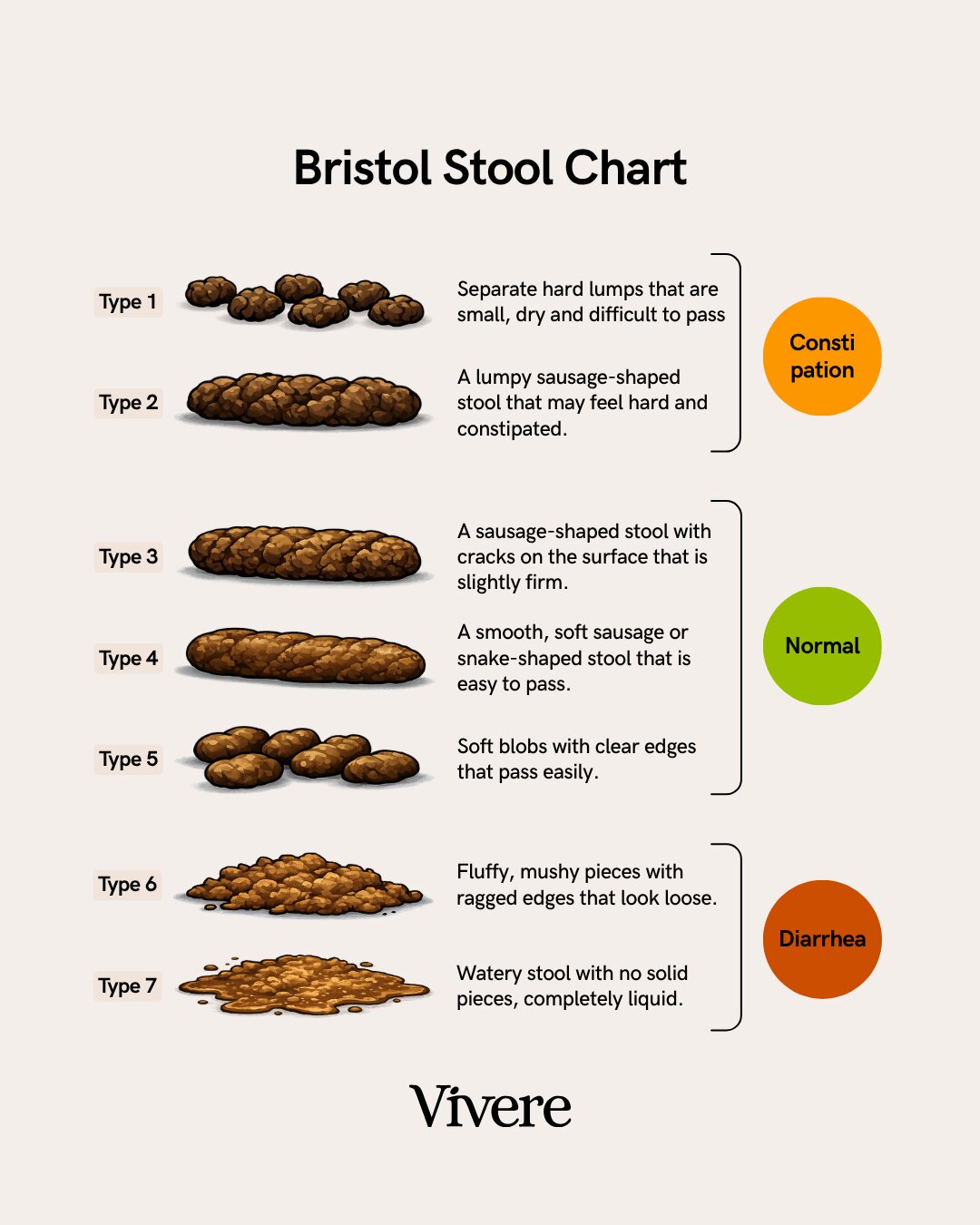
The Bristol Stool Chart focuses on stool shape and texture rather than colour, but it still provides a useful picture of digestive health [6].
This medical tool categorises stool into types ranging from Type 1 stool, which appears as hard lumps, to Type 7 stool, which is liquid stool. While it helps assess bowel function and transit time, it does not directly account for colour changes.
Combining stool shape with colour observations offers a more complete understanding of digestive health and can help identify potential concerns early.
Nutritionist's Corner: Final Thoughts
"Stool colour can act as a daily health check, offering insight into digestion, liver function and the balance of the microbiome.
Monitoring changes in transit time and stool appearance can help you stay aware of your internal health, especially if persistent stool changes occur. While occasional variations are normal, consistent or unusual colours should be discussed with a medical professional to support effective digestion monitoring and overall well-being."
Vivere helps you take control of your health with personalised insights from state-of-the-art gut microbiome testing, nutritional guidance, science-backed biohacking supplements, NAD+ supplementation and expert support. Sign up today and start living better, for longer.
Sources
[2] The formation in vitro of stercobilin from bilirubin
[3] Steatorrhea - StatPearls - NCBI Bookshelf
[4] Investigation of liver and biliary disease - PMC
[5] Hematemesis, Melena, and Hematochezia - Clinical Methods - NCBI Bookshelf
[6] Stool form scale as a useful guide to intestinal transit time - PubMed
Author

Yusra Serdaroglu Aydin, MSc RD
Head of Nutrition and Registered Dietitian
Yusra is a nutritionist with a multidisciplinary background in nutrition, food engineering, and culinary arts. During her education, her curiosity abo...