Sirtuins
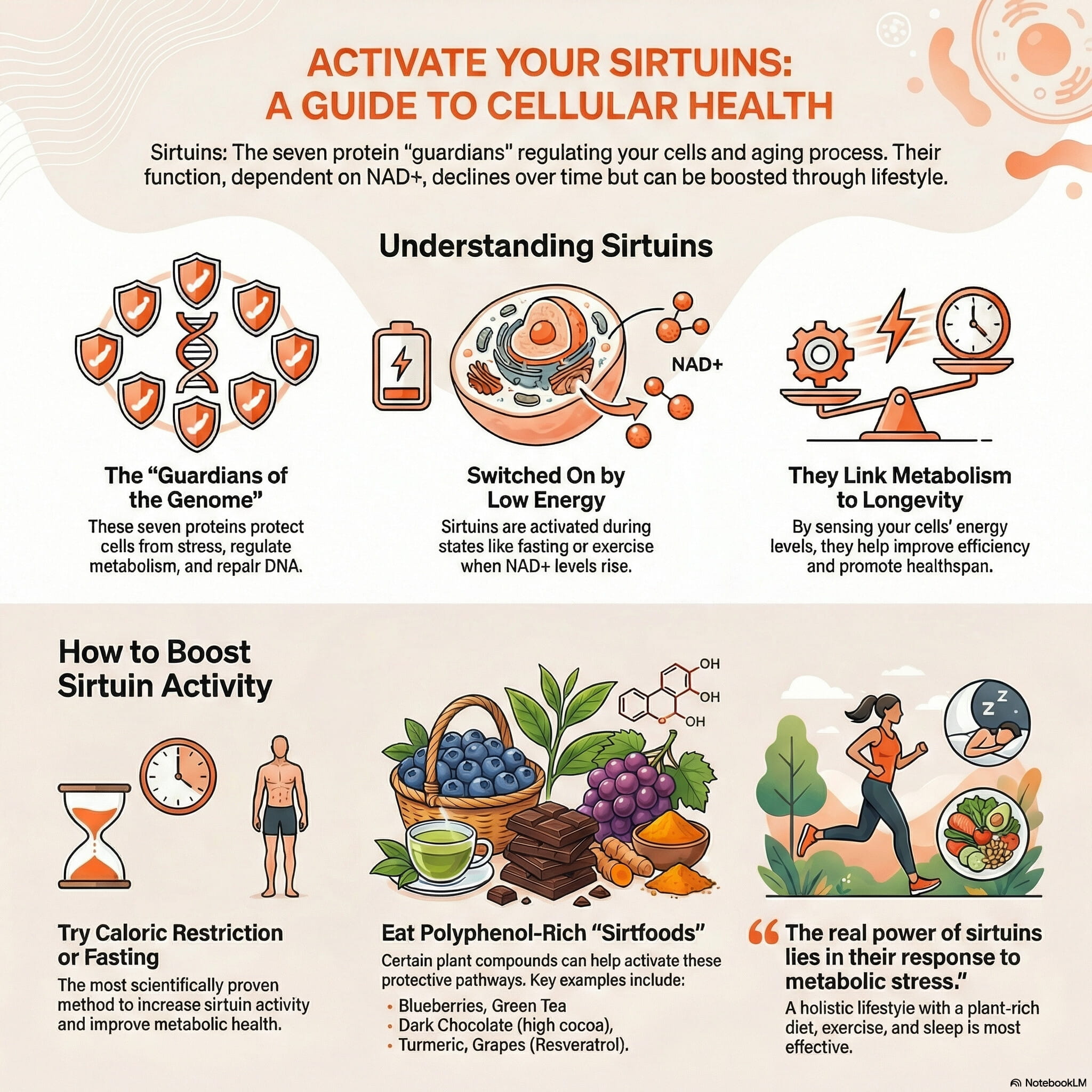
Sirtuins are a family of seven signalling proteins that play a critical role in regulating cellular health, metabolism, and the aging process. Often described as the "guardians of the genome," these proteins work by protecting cells from inflammation and oxidative stress, but they require a specific coenzyme called NAD+ (Nicotinamide Adenine Dinucleotide) to function effectively. Because their activity tends to decline as we get older, maintaining sirtuin function is a primary focus in the science of longevity and healthy aging.

How Sirtuins Work in the Body
Sirtuins function primarily as deacetylases, which means they remove specific chemical markers from your DNA and proteins to change how genes are expressed. This process is heavily dependent on metabolic status. Research indicates that sirtuins link metabolism to longevity by sensing the energy levels in your cells [1]. When energy is scarce, such as during exercise or fasting, NAD+ levels rise, switching sirtuins "on" to repair cells and boost efficiency.
| Sirtuin Type | Primary Location | Key Function |
|---|---|---|
| SIRT1 | Nucleus | Regulates metabolism, DNA repair, and inflammation. |
| SIRT3, SIRT4, SIRT5 | Mitochondria | Controls energy production and oxidative stress in the "powerhouse" of the cell. |
| SIRT6, SIRT7 | Nucleus | Maintains genomic stability and telomere health. |
Learn more about sirtuins in our explainer video:
Diet and Lifestyle Influences
You cannot simply take a "sirtuin pill" to gain their benefits; instead, specific lifestyle choices can stimulate their activity. This concept has popularised the "Sirtfood Diet," which focuses on foods rich in polyphenols that may activate these pathways.
Caloric Restriction and Fasting
The most robust method for activating sirtuins is through caloric restriction or intermittent fasting. Studies have consistently shown that reducing calorie intake without malnutrition increases sirtuin activity, which in turn improves metabolic health and may extend lifespan in various organisms [2].
Sirtfoods and Polyphenols
Certain plant compounds are believed to mimic the effects of fasting by activating sirtuins. The most famous of these is Resveratrol, found in red wine and grapes. Evidence suggests that resveratrol can directly activate SIRT1, potentially offering protection against metabolic diseases [3]. Other key "Sirtfoods" include:
- Green Tea (rich in EGCG)
- Dark Chocolate (high cocoa solids)
- Turmeric
- Blueberries
- Kale
Potential Health Benefits
Activating sirtuin pathways is associated with protection against chronic diseases common in older age. The potential benefits currently being researched include:
- Improved Insulin Sensitivity: Helping the body handle blood sugar more effectively.
- Neuroprotection: Potentially reducing the risk of neurodegenerative conditions by protecting brain cells.
- Cardiovascular Health: Supporting blood vessel function and reducing arterial stiffness.
Nutritionist's Corner: Final Thoughts
"Sirtuins are a fascinating link between what we eat and how we age, but they are not a licence to rely solely on 'superfoods' like red wine or chocolate. The real power of sirtuins lies in their response to metabolic stress. To support these pathways naturally, I recommend a diet rich in diverse, colourful plants, specifically berries, green tea, and leafy greens, combined with lifestyle habits like moderate exercise and restorative sleep. These habits naturally boost NAD+ levels and allow sirtuins to perform their vital repair work efficiently."
- Yusra Serdaroglu Aydin, MSc RD
Gain a better understanding of your gut health with Vivere's gut test kit and support your body's natural NAD+ levels with our at-home NAD injection.
References
Author

Yusra Serdaroglu Aydin, MSc RD
Head of Nutrition and Registered Dietitian
Yusra is a nutritionist with a multidisciplinary background in nutrition, food engineering, and culinary arts. During her education, her curiosity abo...