A Beginner's Guide to LED Face Masks: The Science, the Safety and What the Evidence Really Shows
Last Updated: 31 July 2026
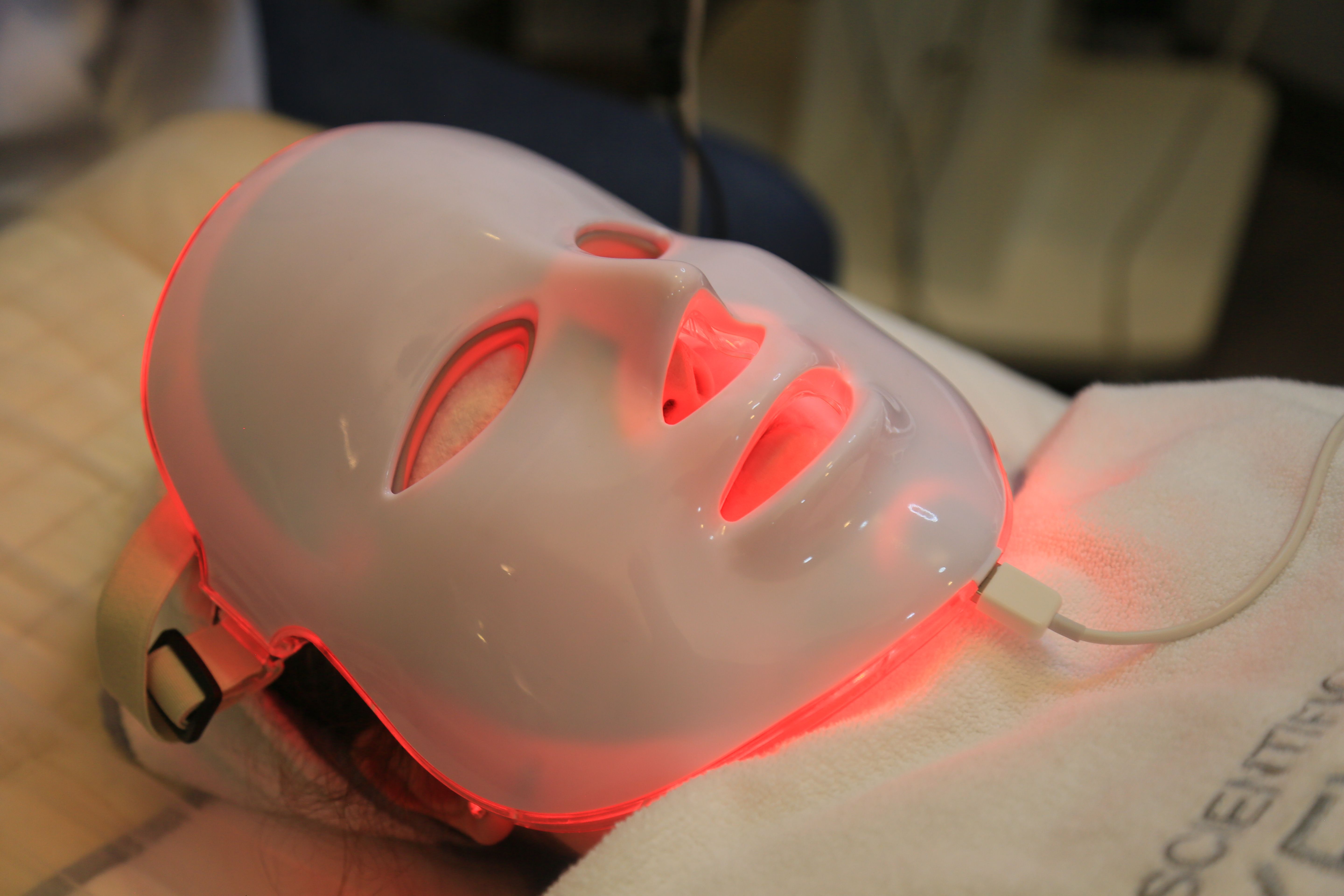
LED face masks have become one of the most talked-about at-home skincare tools in the UK, with claims ranging from smoother skin to fewer breakouts. This beginner's guide to LED face masks explains what LED light therapy is, how photobiomodulation works, what results you can realistically expect and how to use an at-home skincare device safely.
While LED face masks are increasingly popular, it is important to understand how they fit alongside NHS guidance, MHRA regulations and a broader approach to skin health.
In One Sentence:
An LED face mask uses specific wavelengths of visible and near-infrared light to support photobiomodulation, skin repair, collagen production and acne management, although results depend on the type of light, consistency of use and whether you are using at-home versus clinic devices.
Key Takeaways
Do LED face masks actually work?
Research suggests red light and collagen production are linked, while blue light may help some people with mild acne, although gradual results are more realistic than dramatic overnight changes.
Are LED masks safe?
LED mask safety is generally good when devices are used correctly with appropriate eye protection and according to manufacturer instructions.
Is an FDA-cleared mask approved for the UK?
No, FDA clearance does not automatically mean a device meets UK requirements, so look for UKCA marking, CE marking where applicable and relevant MHRA registration for medical claims.
Can diet support my skin too?
Yes, vitamin C, protein, zinc and dietary antioxidants all contribute to collagen support and overall skin health.
Does at-home therapy work as well as professional clinics?
Lower-powered home devices can be effective when used consistently, but results are usually slower than professional treatments.
What is an LED face mask and how does LED light therapy work?
An LED face mask uses light-emitting diodes to deliver low-level light that supports photobiomodulation without heating or damaging the skin.
Unlike lasers, which deliver concentrated beams of energy, LED devices use non-thermal light to expose the skin to specific wavelengths. The idea behind photobiomodulation is that photons from red and near-infrared light are absorbed by structures inside cells, particularly the mitochondria. Research shows that red and near-infrared photons can interact with cytochrome c oxidase, influencing adenosine triphosphate (ATP), reactive oxygen species and cellular signalling processes that support fibroblasts, collagen and elastin production [1].
A foundational review of low-level light therapy in skin also found that light exposure may stimulate fibroblasts, keratinocytes and immune cells involved in tissue repair and regeneration without thermal damage [2]. In simple terms, cellular energy production increases, potentially helping skin repair processes work more efficiently.
Additional mechanisms may involve nitric oxide signalling and light-sensitive proteins called opsins. Blue light works differently. According to DermNet's clinical overview of lasers, lights and acne, blue light can activate porphyrins produced by Cutibacterium acnes (formerly Propionibacterium acnes), creating reactive oxygen species that help reduce acne bacteria [3].
“One useful way to think about LED therapy is through the lens of cellular energy. Skin cell repair requires fuel for cells, and ATP is central to that process. Light therapy supports the skin from the outside, while nutrition provides the building blocks from the inside.”
Which LED light colour does what? A Wavelength Cheat Sheet
Different LED wavelengths target different skin concerns, although research-supported aims should not be confused with guaranteed outcomes.
Blue light (415 to 470 nm): Mainly used for inflammatory acne and works within the epidermis.
Green light (around 520 nm): Sometimes marketed for pigmentation concerns, although evidence remains limited.
Red light (630 to 660 nm): Often used to support fibroblasts, collagen production and skin rejuvenation within the dermis.
Near-infrared light (830 to 850 nm): Penetrates more deeply and is associated with tissue repair and modulation of local inflammation.
An Important Note on Skin Tone
People with different skin tones may respond differently to blue and visible light.
A 2025 review noted that in Fitzpatrick types IV to VI, blue light exposure may worsen hyperpigmentation through mechanisms linked to melanogenesis [4]. Those with melasma or a tendency towards post-inflammatory pigmentation should proceed carefully, consider a patch test and seek professional advice if unsure. Red and near-infrared light may be more suitable options for some individuals concerned about pigmentation.
What results can a beginner realistically expect, and how long does it take?
Most people should expect gradual improvement rather than immediate transformation.
For concerns related to skin ageing, studies suggest consistency matters more than individual sessions. A randomised controlled trial involving 136 volunteers found that red and near-infrared light used twice weekly for 15 weeks improved wrinkles, skin roughness and intradermal collagen density compared with controls [5]. A separate split-face clinical study also reported measurable improvements in skin texture and wrinkle appearance alongside evidence of collagen-related changes [6].
For acne, improvements may appear sooner. A 2024 systematic review covering 35 studies and 1,185 cases found that blue light produced partial clearance in many patients, with improvements often becoming noticeable around four weeks [7]. However, a Cochrane review highlighted that evidence quality remains limited in some areas, meaning conclusions should be interpreted cautiously [8].
For beginners, realistic expectations include:
Gradual improvement over weeks rather than days.
Benefits become more noticeable after consistent use.
Potential support for mild to moderate inflammatory acne.
Reduced appearance of fine lines and wrinkles over time.
Less dramatic effects for severe skin concerns.
A Realistic Expectation Check
At-home masks are lower-powered than clinic devices and generally produce slower results.
Professional treatments can deliver higher doses of light and are often supervised by trained practitioners. If you have severe or scarring acne, a rapidly changing skin concern or symptoms that do not improve, speak with a GP or dermatologist rather than relying solely on home treatment.
How do you use an LED face mask safely, step by step?
Safe use starts with following the manufacturer's instructions and preparing the skin correctly.
1. Cleanse thoroughly
Cleanse and remove make-up and sunscreen so the skin is clean, dry and ready for treatment.
2. Keep skin bare
Avoid applying serums, strong actives or other products beforehand unless your device instructions specifically advise otherwise.
3. Protect your eyes
Use supplied eye shields or goggles where provided and keep your eyes closed during treatment.
4. Run one full cycle
Follow the recommended treatment time, which is commonly between 10 and 20 minutes, and do not exceed the advised frequency.
5. Apply your skincare afterwards
After treatment, apply skincare such as a hydrating serum, moisturiser or barrier cream. SPF remains essential during the day.
Is it safe? Contraindications, Eye Safety and the UK Rules
LED mask safety is generally favourable, but there are important contraindications and precautions.
Clinical reviews of phototherapy commonly exclude people with lupus, photosensitive disorders, light-induced seizures or those using photosensitising medications or supplements [9]. This reflects the need for individual assessment.
NHS guidance also notes that isotretinoin, a prescription medicine used to treat severe acne, can increase sensitivity to light exposure [10]. People taking medication or undergoing treatment should check the mask instructions and consult their prescriber or pharmacist before use, rather than assuming the device is suitable for them.
Who should avoid an LED face mask or check with a professional first?
Some people should consult a GP, pharmacist or dermatologist before use. Avoid or consult with a professional if:
You take a medicine such as isotretinoin (Roaccutane), doxycycline or St John's Wort.
You have a photosensitive condition such as lupus.
You have a history of light-triggered seizures or epilepsy.
You are pregnant and want personalised advice.
You have an undiagnosed or changing mole or lesion.
You have active skin cancer.
You have recently had injectables or a skin procedure.
Do LED face masks damage your eyes?
Most users do not experience eye problems, but eye safety should never be ignored.
A well-known light therapy mask recall by Neutrogena in 2019 was carried out because of a theoretical risk of eye injury in a small subset of people with specific eye conditions or increased ocular photosensitivity, although reported effects were rare, mild and temporary [11].
For safety:
Follow the IEC 62471 photobiological safety standard information where available.
Use supplied eye protection.
Keep your eyes closed.
Do not stare directly at illuminated diodes.
Seek medical advice if you have an existing eye condition or take photosensitising medication.
What UK safety marks and regulations should I look for?
UK consumers should check that products meet relevant regulatory requirements.
According to MHRA guidance, medical devices sold in Great Britain must comply with the UK Medical Devices Regulations 2002, with UKCA marking required and CE marking accepted under transitional arrangements [12]. It is also worth noting that a 2025 ASA ruling challenged acne-treatment advertising claims for an LED mask because the device was not registered with the MHRA as a medical device despite holding UKCA certification [13].
Look for:
UKCA or CE marking.
Clear manufacturer instructions.
Appropriate safety information.
MHRA registration where medical claims are being made.
How can you support your skin from the inside?
No device works in isolation because skin is an organ that is continually rebuilt from nutrients.
Vitamin C is essential for the normal production and maintenance of collagen and connective tissue [14]. Protein provides amino acids required for collagen synthesis, while nutrients such as zinc, selenium and copper contribute to antioxidant defence systems.
A 2025 meta-analysis found that collagen, dietary lipids, fatty acids and polyphenols were associated with improvements in wrinkles, skin elasticity, and barrier integrity while carotenoids helped reduce photo-oxidative damage and redness [15]. Research also highlights the importance of proline, lysine and vitamin C in collagen formation [16].
High intakes of free sugars may contribute to glycation and the formation of advanced glycation end products, which can promote collagen stiffening and visible ageing.
The gut-skin axis may also influence skin appearance through interactions between digestion, immunity and inflammation. For more information, see our guide to the gut-skin axis [17].
“Healthy skin is supported from within. A varied, nutrient-rich diet provides the protein, vitamins, minerals and healthy fats the skin needs to maintain its structure, resilience and natural repair processes.”
Choosing Your First Device: Rigid Plastic vs Flexible Silicone
The best device is the one that combines good fit, comfort and evidence-based specifications.
Rigid plastic masks might contain a higher number of LEDs and can provide consistent positioning across the face. Flexible silicone masks are generally more portable, lightweight and comfortable, while also allowing close skin contact.
When comparing options, consider:
Fit and comfort.
Budget.
Number of LEDs.
Wavelength and irradiance.
Light output.
Portability.
Ease of cleaning.
Buying Checklist
Documented wavelengths: Look for clinically studied ranges such as red around 630 to 660 nm and blue around 415 nm.
Stated output: Manufacturers should provide information about output and ideally joules per square centimetre.
UKCA or CE marking: Confirm regulatory compliance.
Eye protection: Built-in protection is a plus.
Timing and frequency instructions.
MHRA registration if medical claims are being advertised.
Availability through reputable UK beauty retailers.
A price point that fits your budget.
Frequently Asked Questions
Do LED face masks really work?
Research from controlled trials suggests that red and near-infrared light may support collagen density and reduce wrinkles, while blue light may help some cases of mild acne. At-home versus clinic devices differ in power, so gradual results are more realistic than dramatic changes.
How often should you use an LED mask?
Treatment schedules vary substantially. Most devices recommend three to five sessions a week lasting around 10 to 20 minutes. Always follow the duration and frequency tested and specified for the particular device; using it more often is not necessarily more effective.
Can you use retinol with an LED face mask?
Retinol and other strong activities can increase irritation in some people. Many users prefer bare skin application during treatment, followed by hydrating and barrier products afterwards, with retinol used separately in an evening routine.
Do you need eye protection with an LED mask?
Yes, eye protection is essential. Use built-in shields or goggles where provided, keep your eyes closed and do not stare directly at the lights. Extra caution is important if you have an eye condition or use photosensitising medication.
Are at-home LED masks as good as in-clinic treatments?
Per session, clinic and professional devices typically deliver higher light doses and may produce faster and more powerful results. However, at-home masks offer convenience, gentleness and the ability to maintain a regular routine.
Vivere Corner: Final Thoughts
“LED face masks can be a helpful addition to a wider skin health routine, but they are not a quick fix. Red light may support collagen production, and some acne-focused wavelengths may help certain people, although results usually take time and regular use.
It is worth being cautious of any product that promises dramatic changes. Skin health is also supported from within, so a balanced diet with enough protein, vitamin C, healthy fats, colourful fruit and vegetables, and good hydration still matters. LED therapy can sit alongside these foundations, but it should not replace them.
Choose a device that meets the relevant safety requirements, follow the instructions carefully, protect your eyes, and seek professional advice if you have persistent or concerning skin changes.”
Vivere helps you take control of your health with personalised insights from state-of-the-art gut microbiome testing, nutritional guidance, science-backed supplements, NAD injections and expert support. Sign up today and start living better, for longer.
Sources
[2] Low-level laser (light) therapy (LLLT) in skin: stimulating, healing, restoring - PubMed
[4] LED photobiomodulation: From dermatological care to neuroprotection and pain management – review
[8] Light therapies for acne - Barbaric, J - 2016 | Cochrane Library
[10] Isotretinoin (Roaccutane) - a medicine for severe acne
[11] Neutrogena
[12] Regulating medical devices in the UK - GOV.UK
[13] LED mask adverts banned by UK regulator over acne and rosacea claims
[14] Vitamins and minerals - Vitamin C - NHS
[17] Gut Skin Axis: How Your Gut Health & Skin Work Together
Author

Yusra Serdaroglu Aydin, MSc RD
Head of Nutrition and Registered Dietitian
Yusra is a nutritionist with a multidisciplinary background in nutrition, food engineering, and culinary arts. During her education, her curiosity abo...