Is NAD a Peptide?
Last Updated: 29 April 2026
NAD+ is often grouped with peptides in conversations about longevity. Although both support cellular function, they belong to completely different scientific categories.
The insights in this article are provided by Vivere's Head of Nutrition, Yusra Serdaroglu Aydin, a registered dietitian with a background in nutrition, food engineering and culinary arts. Her guidance brings a science-led view of personalised nutrition and the human microbiome, which helps explain why NAD+ works differently from peptides and why the distinction matters for long-term health.
In One Sentence:
NAD+ is not a peptide because it is a coenzyme made from B vitamins rather than a chain of amino acids.
Key Takeaways
Here are the five biggest takeaways from this article about whether or not NAD is considered a peptide:
Is NAD+ a peptide? No. NAD+ is a coenzyme, while peptides are short chains of amino acids.
Why do people mix them up? They are often used together in longevity clinics and have overlapping wellness benefits.
Does NAD+ boost energy? Yes. It supports ATP production and helps power cellular energy.
Can NAD+ improve brain health? Research suggests a link between NAD+ levels and healthier cognitive ageing.
Can you take NAD+ and peptides together? Yes, although the combination should be used with professional guidance.
What is NAD+? (The Fuel)
NAD+ is a coenzyme that helps cells create energy and repair themselves.
NAD+ stands for nicotinamide adenine dinucleotide and is essential for redox reactions, ATP production and several longevity-related pathways that decline with age.
NAD levels naturally fall as we grow older. This reduction is associated with reduced mitochondrial function and age-related disease risk. Supporting NAD+ status through lifestyle or precursor supplementation (including NMN and NR) is one strategy often explored in preventative health [1].
What is a peptide? (The Messenger)
A peptide is a short chain of amino acids that tells cells how to behave.
Peptides act as messengers in the body and influence pathways linked with healing, immunity, and skin regeneration. They are smaller than proteins and often more targeted, which is why many medical and aesthetic treatments use them to prompt specific responses.
Collagen peptides support skin and joint health, while therapeutic peptides such as GLP-1 influence appetite regulation. Their versatility means they appear across a range of settings.
Why do people confuse them?
NAD+ and peptides can be confused because they are often used in similar wellness settings and have overlapping goals.
NAD+ vs. Peptides: The Comparison
NAD+ and peptides differ in structure, function and biological role.
It is helpful to understand that NAD+ drives chemical reactions that produce energy, while peptides communicate instructions that influence cellular behaviour. Their combined use is popular because energy and communication work hand in hand in the body [2].
What are the benefits of NAD+?
NAD+ supports cellular energy, DNA integrity and long-term cognitive health.
Increased Energy (ATP Production)
NAD+ helps convert nutrients into ATP, the energy used by every cell.
When NAD+ is available in adequate amounts, mitochondria work more efficiently. This can support physical performance and overall vitality.
DNA Repair
NAD+ activates enzymes that help repair DNA damage.
These enzymes play a role in longevity and help maintain genomic stability in tissues.
Brain Health
Research links NAD+ levels with healthier ageing of the brain.
Animal and early human studies suggest NAD+ supports neuronal resilience within the brain and protection against age-related cognitive decline [3].
Can you take NAD+ and peptides together?
It is possible to use both NAD+ and peptides at the same time if you get help from a qualified practitioner.
Combining NAD+ and certain peptides may support wellness goals such as mitochondrial health or tissue repair. Safety and dosing should always be overseen by a clinician because therapeutic peptides act on targeted biological systems [4].
It’s important to note that many peptides are only sold for research purposes and are not intended for human and veterinary use. Some may be used as ingredients, while others are not regulated for any human use. Many peptides are used as ingredients in cosmetic products and in some cases, supplements. Injectable peptides are restricted to clinical or scientific use.
Common Stacks in 2026
NAD+ and peptides are often combined to address specific aims. This combination is often known as a “stack”.
The Anti-Ageing Stack
In 2025, longevity clinics often combine them. You might get an injection that contains both NAD+ and a peptide such as GHK-Cu or Glutathione.
These therapies are offered side by side in clinics that focus on cellular ageing or tissue repair support, so many people assume they belong to the same category even though they work differently [5].
Similar Benefits
Both are used to improve energy, skin health and recovery.
NAD+ supports mitochondrial function, while specific peptides support collagen production, appetite pathways or tissue repair, so the benefits can seem related.
Nomenclature
Scientific names can be confusing. Because both involve "acids" (amino acids vs nucleic acids) and "chains," it is easy to mix them up.
NAD+ is made from niacin and contains nucleotides, while peptides are physical chains of amino acids, yet the terminology can sound similar to non-specialists.
For Skin
Collagen Peptides and NAD+ Precursors
This combination supports collagen structure while giving skin cells the energy needed for renewal, which may help improve elasticity and hydration [6].
For Weight Loss
GLP-1 Peptides (like Wegovy) and NAD+
GLP-1 peptides regulate appetite and blood sugar, while NAD+ assists energy production [7]. It is important to note that a prescription is required for GLP-1 peptides.
For Injuries
BPC-157 and NAD+
BPC-157 influences tissue healing pathways, and NAD+ may support cell repair and energy demands during recovery [8].
Nutritionist's Corner: Final Thoughts
“NAD+ is not a peptide, yet both play meaningful roles in cellular health, which is why they often appear together. Understanding the difference helps people choose evidence-based wellness strategies that match their priorities.”
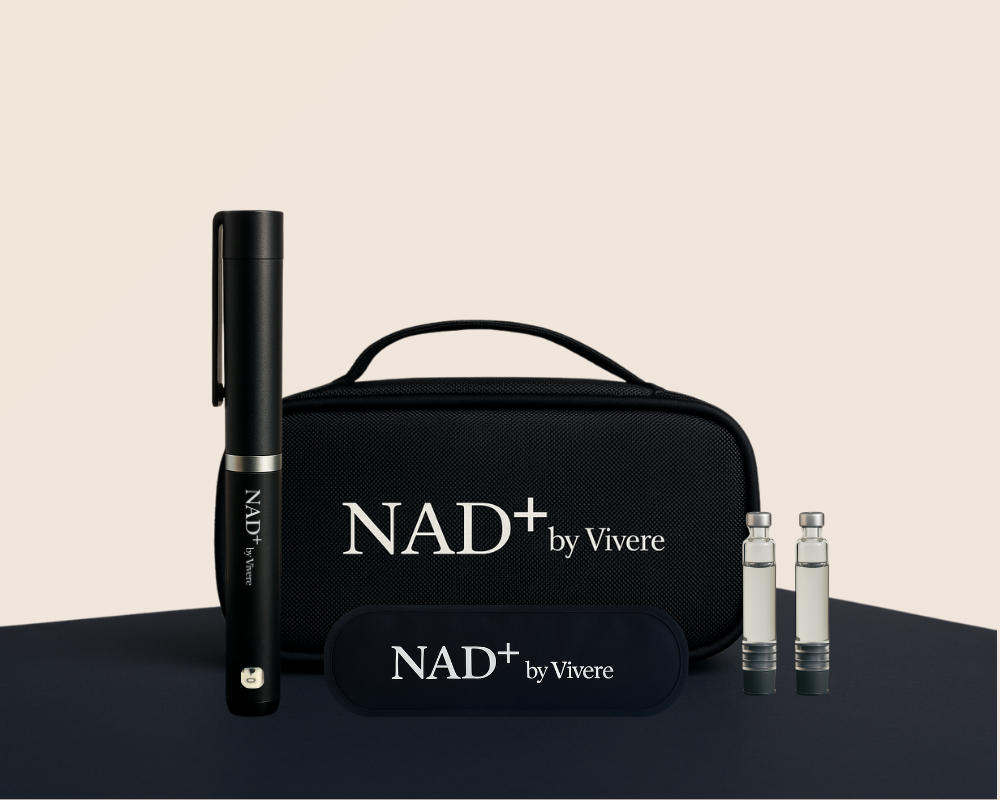
Vivere helps you take control of your health with personalised insights from state-of-the-art gut microbiome testing, nutritional guidance, science-backed supplements, NAD injections and expert support. Sign up today and start living better, for longer.
Sources
[4] Therapeutic potential of NAD-boosting molecules: the in vivo evidence - PMC
[6] The role of sirtuins in dermal fibroblast function - Frontiers
Author

Yusra Serdaroglu Aydin, MSc RD
Head of Nutrition and Registered Dietitian
Yusra is a nutritionist with a multidisciplinary background in nutrition, food engineering, and culinary arts. During her education, her curiosity abo...