Injection Types Explained: Why We Use the 'Tummy Pinch' (Sub-Q)
Last Updated: 28 April 2026

What is a subcutaneous injection? It is a shallow injection into the fatty layer just under your skin, known as adipose tissue. Unlike deep muscle shots or hospital IV drips, subcutaneous injections are nearly painless and release substance slowly into the body. This creates steady-state plasma levels, avoiding the "crash" often felt after faster delivery methods.
Key Takeaways
IV Drips (Intravenous): Fast and direct, but requires a clinic and may cost a fortune.
IM Shots (Intramuscular): Goes deep into the muscle. It hurts and is mostly for vaccines.
Sub-Q (Subcutaneous): The "Goldilocks" zone. Easy, painless and perfect for home use.
Steady Release: Fat tissue releases NAD+ slowly, keeping your energy stable all day.
The Three Ways to Inject
Not all needles are created equal.
When doctors want to get medicine into your body, they have three main routes. The difference comes down to how deep the needle goes and how fast the drug hits your system.
1. Intravenous (IV): The "Fire Hose"
A nurse finds a vein in your arm and inserts a cannula. The fluid goes straight into your bloodstream.
Pros: It hits you instantly (100% absorption).
Cons: It is invasive, expensive, and you cannot do it yourself.
The Vibe: Great for a hospital emergency, bad for a morning routine.
2. Intramuscular (IM): The "Deep Shot"
This is what you get when you have a flu jab or a tetanus booster.
The needle is long enough to punch through skin and fat to reach the muscle underneath.
Pros: It can hold a larger volume of liquid than Sub-Q.
Cons: It hurts. It often leaves your arm aching for days.
The Vibe: A necessary evil for vaccines, but too painful for daily use.
3. Subcutaneous (Sub-Q): The "Tummy Pinch"
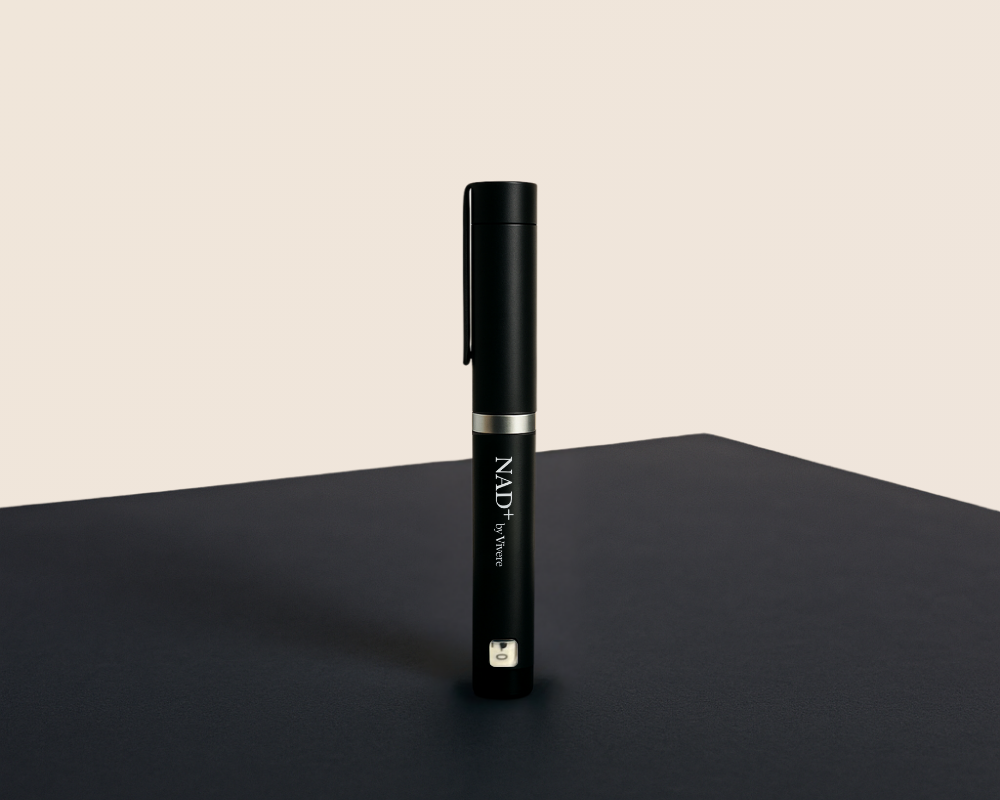
This is the method used by Vivere NAD+ injections. It is the standard for diabetics taking insulin because it is safe and simple.
You pinch an inch of fat (usually on your stomach or thigh) and use a tiny needle.
Pros: It is virtually painless because fatty tissue has very few nerve endings [1].
Cons: You are limited to small doses (under 1ml), which is perfect for NAD+.
The Vibe: Quick, easy and painless enough.
Why Fat is Your Friend (Pharmacokinetics)
There is a scientific reason we choose fat over veins. It is called pharmacokinetics, which is just the study of how medicine moves through your body.
When you inject into a vein (IV), your levels spike instantly and then drop fast. It is a roller coaster.
When you inject into adipose tissue (fat), the magic happens in the capillaries.
Fat tissue has poor blood flow compared to muscle [2]. This sounds bad, but it is actually good. It forces the NAD+ to be absorbed slowly.
This creates a "depot" effect [3]. The fat holds the NAD+ and drips it into your blood gradually over hours.
This maintains steady-state plasma levels. Instead of a 30-minute rush followed by a crash, you get sustained cellular energy throughout the day.
The Pain Factor: Small needles vs. Syringes
Fear of needles usually comes from seeing big hospital syringes. Vivere pens use 6mm needles that are thinner than a human eyelash.
Because the needle never reaches the muscle, it doesn't trigger the signal your brain expects. Most users describe it as similar to a mosquito bite, or feel nothing at all.
The Smartest Route
We chose the subcutaneous route because it respects your lifestyle and your biology.
IV drips are too much hassle. Muscle injections hurt too much.
The "tummy pinch" offers the perfect balance. High quality absorption with the ease of a daily routine. It ensures your NAD+ gets where it needs to go, without interruption.
Nutritionist's Corner: Final Thoughts
"Many patients fear injections because they imagine deep intramuscular shots. Subcutaneous delivery is fundamentally different. By utilising the adipose (fat) layer, we achieve a slow, sustained release of NAD+ into the capillaries. This mimics the body's natural steady state, avoiding the sharp spikes and crashes associated with intravenous (IV) doses."
Vivere helps you take control of your health with personalised insights from state-of-the-art gut microbiome testing, nutritional guidance, science-backed supplements, NAD injections and expert support. Sign up today and start living better, for longer.
Sources
[2] Regulation of fatty acid delivery in vivo - PubMed
[3] Subcutaneous absorption of biotherapeutics: knowns and unknowns - PubMed
Author

Yusra Serdaroglu Aydin, MSc RD
Head of Nutrition and Registered Dietitian
Yusra is a nutritionist with a multidisciplinary background in nutrition, food engineering, and culinary arts. During her education, her curiosity abo...