Scared of Needles? 3 Tricks to Make Your Injection Pain-Free
Last Updated: 28 January 2026
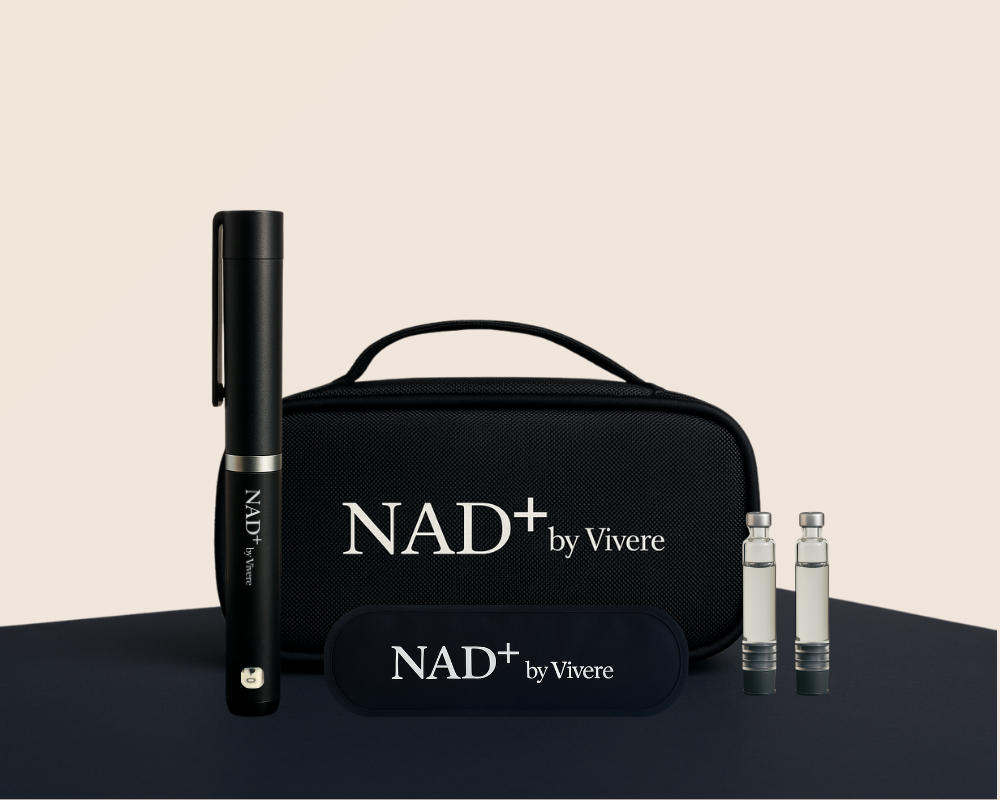
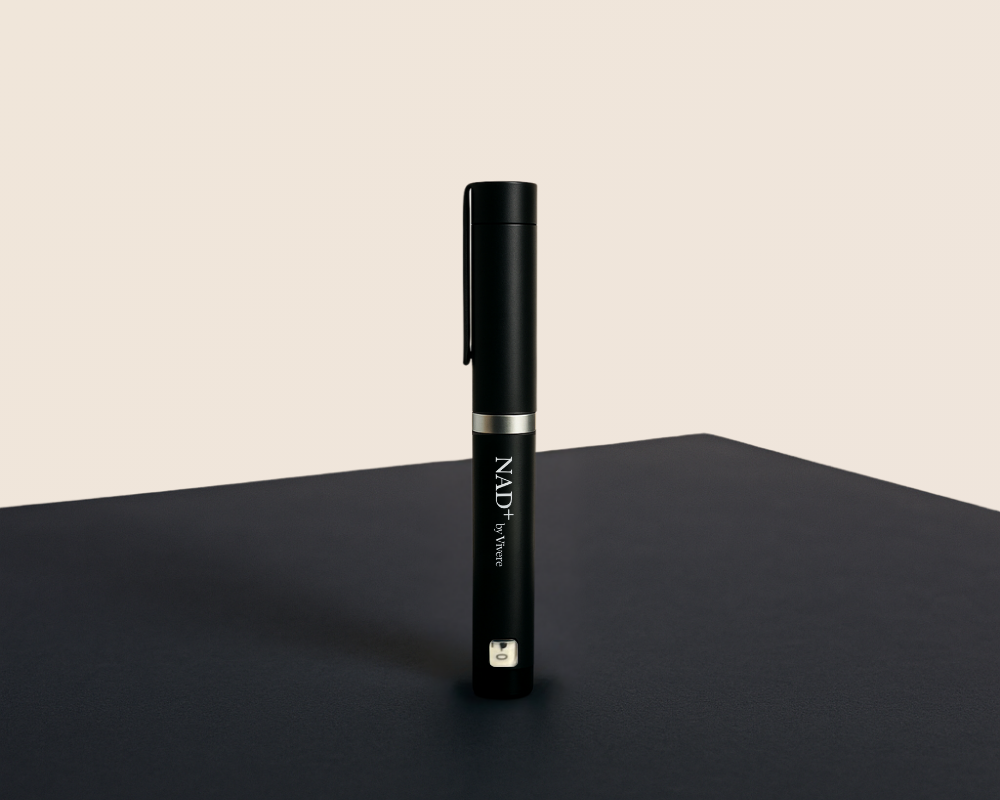
Do NAD+ injections hurt? For most people, subcutaneous injections are virtually painless and safe. Vivere uses a microneedle (only 6mm long) that is thinner than a human eyelash. Because the needle enters fatty tissue rather than muscle, it avoids the sensitive nerves that cause the deep ache associated with vaccines or blood tests. Most users describe the sensation as a tiny scratch or a mosquito bite.
Key Takeaways
It’s Not a Syringe: The pen uses a 31-gauge microneedle.
Fat vs. Muscle: You inject into fat (adipose tissue), which has far fewer nerve endings than muscle.
Ice Works: Numbing the area for 60 seconds can make the skin completely feelingless.
The Cough Trick: A simple cough at the moment of injection can block pain signals to the brain [1].
Explaining Trypanophobia
If the word "needle" makes your palms sweat, you likely have Trypanophobia (fear of medical procedures involving injections).
This fear usually comes from childhood memories of large hospital syringes or painful vaccines.
Vivere is different.
Vaccines use long, thick needles to punch deep into the muscle (Intramuscular). This hurts because the muscle reacts with a pain response.
Vivere uses a short, hair-thin needle to slide into the fat layer just under the skin (Subcutaneous).
The needle is so small that it often doesn't even trigger the skin's pain receptors. You might look down and realise it is already done.
Trick 1: The Ice Cube Method
If you are worried about the initial "pinch," you can cheat your biology.
Cold receptors and pain receptors fight for space in your brain. If you flood the area with cold signals, the pain signal can’t get through [2].
How to do it:
Take an ice cube from the freezer.
Hold it against your chosen spot (stomach or thigh) for 60 seconds.
Remove the ice, wipe the area dry with an alcohol wipe and inject immediately.
The skin will be numb, so you won't feel the needle enter.
Trick 2: The "Cough" Distraction
Nurses have used this trick for decades because it works.
It is based on the Gate Control Theory of pain. A sudden physical action (like a cough) distracts your central nervous system for a split second.
How to do it:
Place the pen against your skin.
Take a deep breath.
Cough loudly and press the button at the exact same moment.
Your brain focuses on the cough, not the skin. By the time you stop coughing, the injection is over. Be careful when self-injecting.
Trick 3: Speed (Don't Hesitate)
The anticipation is always worse than the reality.
When you hold the pen against your skin and wait, your anxiety builds. Your muscles tense up.
The Solution:
Dial your dose.
Place against the skin.
Click immediately.
Do not give yourself time to overthink it. The Vivere pen is designed to work instantly.
It Gets Easier
The first time is always the hardest.
By the third day, most of our customers laugh at how scared they were. Remember, you are in control. The needle is tiny. The benefits are huge.
Nutritionist's Corner: Final Thoughts
"Fear of injections is a very real psychological barrier, but physiologically, subcutaneous injections are minimally invasive. Because the small needle does not penetrate muscle tissue, it causes less pain than a vaccine does."
Vivere helps you take control of your health with personalised insights from state-of-the-art gut microbiome testing, nutritional guidance, science-backed supplements, NAD injections and expert support. Sign up today and start living better, for longer.
Sources
[1] Reducing Venipuncture Pain by a Cough Trick: A Randomized Crossover Volunteer Study
Author

Yusra Serdaroglu Aydin, MSc RD
Head of Nutrition and Registered Dietitian
Yusra is a nutritionist with a multidisciplinary background in nutrition, food engineering, and culinary arts. During her education, her curiosity abo...