Vagus Nerve
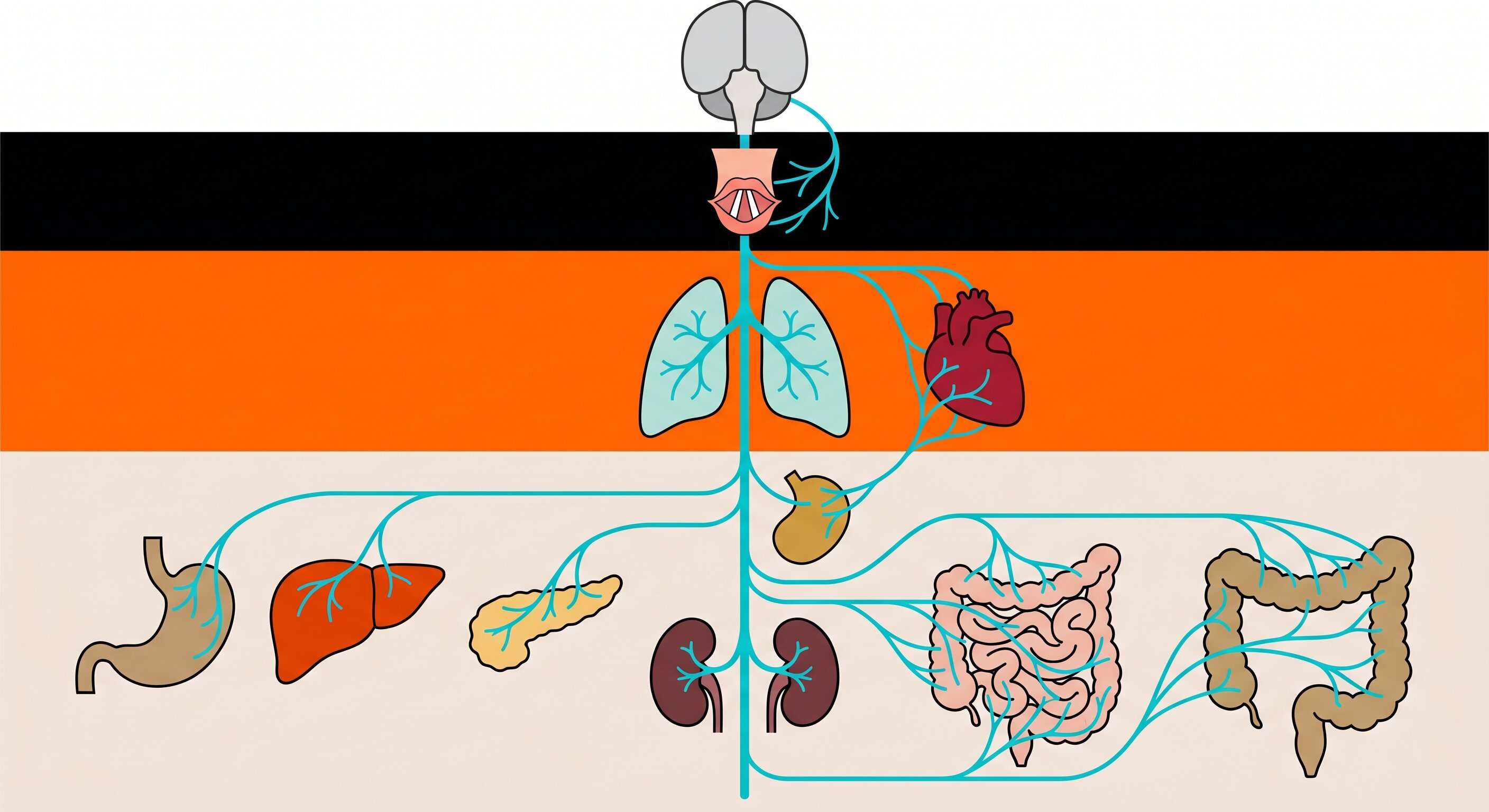
The vagus nerve, also known as cranial nerve X, is the longest and most complex nerve in the autonomic nervous system, serving as the primary command centre for the body's parasympathetic 'rest and digest' response. Deriving its name from the Latin word for 'wanderer', this remarkable nerve originates in the brainstem and travels down through the neck, branching extensively to connect the brain to major organs including the heart, lungs, and the entire digestive tract. It acts as a bi-directional information highway, regulating involuntary physical processes such as heart rate, respiratory rhythm, inflammation levels, and digestion[1].
The Role of the Gut-Brain Axis
The gut-brain axis is a continuous, biochemical communication network where the vagus nerve functions as the primary physical cable connecting your central nervous system to your enteric nervous system[2]. Interestingly, roughly 80% of the nerve fibres in the vagus nerve are afferent, meaning they send sensory information from the gut upwards to the brain rather than the other way around.
When you eat, the vagus nerve monitors the stomach's expansion, senses the types of nutrients being digested, and communicates with your gut microbiome. If your gut lining is inflamed or populated by unhealthy bacteria, the vagus nerve immediately relays this stress to the brain. According to NHS data, up to 1 in 5 people in the UK will experience Irritable Bowel Syndrome (IBS) at some point, and clinical research increasingly points to a dysregulated vagus nerve as a key contributor to these functional gastrointestinal disorders.
Understanding Vagal Tone
Vagal tone refers to the strength, health, and efficiency of your vagus nerve, which dictates how quickly your body can relax after experiencing a stressful event. A person with high vagal tone can rapidly transition from a state of high alert ('fight or flight') back to a calm baseline. Medical professionals often measure vagal tone indirectly by tracking Heart Rate Variability (HRV)[3], which is the slight fluctuation in time intervals between your heartbeats as you breathe.
| Vagal Tone Status | Common Physical Indicators | Health Implications |
|---|---|---|
| High Vagal Tone (Optimal) | High Heart Rate Variability, stable mood, efficient digestion, and robust immune response. | Faster recovery from stress, lower systemic inflammation, and a reduced risk of cardiovascular disease. |
| Low Vagal Tone (Dysregulated) | Low Heart Rate Variability, chronic fatigue, sluggish digestion (bloating or constipation), and elevated resting heart rate. | Increased vulnerability to anxiety, chronic inflammation, and metabolic imbalances. |
Dietary and Lifestyle Stimulation
Stimulating the vagus nerve involves adopting specific therapeutic habits and nutritional strategies that actively engage the parasympathetic nervous system. Because the nerve is so closely tied to lifestyle factors, you can effectively train it much like a muscle.
- Deep Diaphragmatic Breathing: Slow, deep breaths that expand the stomach rather than the chest mechanically stimulate the vagus nerve receptors located in the diaphragm[4].
- Cold Exposure: Splash cold water on your face or take a brief cold shower. The sudden drop in temperature forces the body to adjust its heart rate, activating vagal pathways.
- Omega-3 Fatty Acids: Consuming oily fish like salmon and mackerel provides EPA and DHA. These essential fats help increase Heart Rate Variability and lower the inflammatory signals the vagus nerve has to process[5].
- Probiotic-Rich Foods: Foods like kefir, sauerkraut, and live yoghurt promote a diverse gut microbiome. Beneficial gut bacteria produce short-chain fatty acids that positively stimulate vagal nerve endings in the intestinal wall[6].
Nutritionist's Corner: Final Thoughts
'The vagus nerve is the physiological bridge between what you eat and how you feel. We often think of stress as purely psychological, but the foods we choose can either soothe or agitate our nervous system via this incredible nerve. If your diet is high in ultra-processed foods and refined sugars, you are essentially sending danger signals straight from your gut to your brain, lowering your vagal tone over time. I always advise my clients to focus on a high-fibre diet rich in diverse plant materials. By feeding your good gut bacteria, you naturally stimulate the vagus nerve to keep you in a calm, restorative state where optimal digestion and healing can actually occur.'
Yusra Serdaroglu Aydin, MSc RD
References
Tracey, K. The inflammatory reflex. Nature 420, 853–859 (2002). https://doi.org/10.1038/nature01321
Author

Yusra Serdaroglu Aydin, MSc RD
Head of Nutrition and Registered Dietitian
Yusra is a nutritionist with a multidisciplinary background in nutrition, food engineering, and culinary arts. During her education, her curiosity abo...