Best Liposomal NAD+ Supplement in the UK: How to Choose
Last Updated: 18 September 2026
In one sentence:
The best liposomal NAD+ supplement in the UK uses fully formed direct beta-NAD+, protects the active ingredients with genuine liposomal encapsulation and an enteric coating, delivers a meaningful daily dose, and is made to UK GMP standards with independent lab testing.
The UK longevity market has exploded, and the shelves are crowded. You will see NAD+ capsules sitting next to NMN powders, nicotinamide riboside tablets, and NAD+ drips, often with very similar promises and wildly different price tags. It is easy to feel stuck.
Here is the useful truth. Oral NAD+ supplementation can be a practical way to support your body's levels, but only if the delivery mechanism is right. The molecule itself is fragile, so how a capsule is made matters just as much as what is inside it. Tiredness and fatigue are one of the most common reasons people in the UK visit their GP, and one UK survey found that between 10 and 18% of people report tiredness or fatigue lasting a month or longer,6 so it is no surprise that interest in cellular energy support keeps growing.
This guide gives you a clear, five-point framework for judging any NAD+ product on the UK market, explains the science in plain terms, and shows you exactly what separates a well-made supplement from a weak one.
Key Takeaways
What makes a liposomal NAD+ supplement worth buying?
The phospholipid bilayer (liposomes) helps protect the molecule as it passes through the digestive system, aiming to support its delivery, absorption and bioavailability.
Is direct NAD+ better than NMN or NR?
They are not better or worse; they work differently. NMN and NR are precursors your body must convert into NAD+, while direct NAD+ is the finished coenzyme. NMN's status as a novel food in the UK is also currently unsettled.
What dose should I look for?
There is no single official recommended dose for NAD+ itself. Make sure you check the label and compare the amount of NAD+ provided per serving. A 500 mg dose is considered a high-strength option.
How do I know a brand is trustworthy?
Check for UK GMP manufacturing, independent third-party lab testing where possible, and marketing that stays within authorised health claims rather than promising to reverse ageing or cure disease.
Why does standard oral NAD+ struggle, and how does liposomal delivery help?
Standard oral NAD+ struggles because the molecule is large and fragile, so much of it is broken down by stomach acid and first-pass metabolism before it reaches your bloodstream. Liposomal delivery helps by wrapping the NAD+ in a protective fatty shell that survives digestion.
Let us break that down.
The problem: stomach acid and first-pass metabolism
Nicotinamide Adenine Dinucleotide (NAD+) is a coenzyme found in every living cell, where it helps power mitochondria and the production of ATP, your cells' energy currency. The catch is that a plain NAD+ powder or a cheap capsule faces a hostile journey. Gastric acid begins to degrade it, and first-pass metabolism in the liver removes more before it can circulate. Standard NAD+ is degraded by stomach acid. Little of the original dose survives intact.
The solution: liposomal encapsulation
Liposomal encapsulation technology solves this by enclosing each NAD+ molecule inside a phospholipid bilayer, a double layer of fat that mimics the structure of your own cell membranes. Because the carrier looks like human tissue, it can shield the NAD+ through the stomach and help it pass into the bloodstream more efficiently. Liposomal delivery protects NAD+ molecules. This is the same principle used for other hard-to-absorb nutrients.
The enteric advantage: double protection
An enteric coating is a second layer of defence that stops the capsule from opening in the stomach, so it only releases its contents in the intestine, where absorption happens. Enteric coating prevents early breakdown. Paired with liposomes, you get double protection: the coating gets the capsule past the stomach, and the liposome carries the NAD+ across the digestive tract.
"Not all NAD+ supplements are created equal. The type of active ingredient and the way it is delivered to your body both matter. NAD+ is a relatively large and sensitive molecule that may benefit from protection as it passes through the digestive system. That’s why we chose liposomal NAD+ to support its delivery, absorption and bioavailability."
It is worth being honest about the evidence. Research into how well oral NAD+ raises levels in the body is still developing, and although NAD+ is widely thought to decline with age, a 2022 review in Nutrients on whether the age-related NAD+ decline is a universal truth shows the evidence varies between tissues and studies.4 A 2025 review in Nature Metabolism on NAD+ precursor supplementation in human ageing found that supplements can increase circulating NAD+ in some trials, but that firm functional benefits in people are still limited and need larger studies.3 That is exactly why delivery format matters so much when you choose. If you are going to supplement, it makes sense to give the molecule the best possible chance of being absorbed. You can read more about how liposomal NAD+ compares with standard oral NAD+ in our dedicated comparison.
Precursors or direct NAD+: what is the difference?
The difference is conversion. Direct NAD+ is the coenzyme itself your cells use during energy production, while precursors such as NR and NMN are building blocks your body first has to convert into NAD+ through several steps. Both routes aim to raise NAD+; they simply start at different points.
This matters for UK shoppers because the three ingredients also sit in very different regulatory positions.
A note on NMN. NMN is hugely popular, but its regulatory status is the reason for caution. The Food Standards Agency treats it as a novel food, which means it needs formal authorisation before it can be sold legally as a supplement, and that authorisation is not yet in place in Great Britain.5 Common NMN marketing claims about "cellular repair" or "healthy ageing" are also not authorised. For a fuller explanation, see our guide to the UK legal status of NAD+ supplements.
The practical takeaway: why ask your body to work through several conversion steps when advanced liposomal delivery lets you absorb direct NAD+? If you want the mechanism in more detail, we cover the differences between NAD+, NMN and NR separately.
The 5-point buyer's framework for UK consumers
Use these five checks to judge any NAD+ product, from any brand. They put you in control and let you see past the marketing.
1. Does it use direct beta-NAD+?
Check that the label says nicotinamide adenine dinucleotide. Some products marketed around NAD+ actually contain only NMN, NR or plain vitamin B3. There is nothing wrong with those ingredients, but you should know which one you are buying and pay accordingly.
2. Is it genuinely liposomal?
Real liposomal encapsulation is not the same as a simple oil blend or an emulsion that borrows the name. Look for a clear description of the liposome and, ideally, non-GMO sunflower lecithin as the phospholipid source, which many people prefer to soy. If a product says "liposomal" but gives no detail, treat that as a flag.
3. Is the dose meaningful?
Potency varies enormously between brands. Look for a clear daily amount rather than a proprietary blend that hides the number. A capsule delivering 500mg of beta-NAD+ is a strong, transparent benchmark to measure others against.
4. Is it made and tested to UK standards?
The UK supplement market is broad, and quality is not guaranteed. Insist on manufacturing under Good Manufacturing Practice (GMP) and independent, third-party laboratory testing for purity and heavy metals where possible. For athletes, check if the product is safe to use and if it has been tested by bodies like Informed Sport, which rigorously analyses products for prohibited ingredients in sport.
5. Are the claims compliant and realistic?
This is the fastest way to spot a brand that cuts corners. Walk away from anyone promising to "reverse ageing" or "cure" a condition, because those are illegal claims for a food supplement and the Advertising Standards Authority actively rules against them.7 A reputable brand focuses on the science of cellular energy and stays within authorised territory. Because NAD+ is related to the vitamin B3 (niacin) family, the compliant benefit language draws on the authorised claim that niacin contributes to normal energy-yielding metabolism and the reduction of tiredness and fatigue.2 The NHS notes that niacin helps the body release energy from food and keeps the nervous system and skin healthy.1
"I strongly believe that supplements should be marketed from a scientific perspective rather than through bold claims. I recommend checking the tone and what is being promised about the product and comparing these claims with the current evidence before buying anything. It is also important to keep your expectations realistic and be consistent to see meaningful results."
How do Vivere's NAD+ Liposomal Capsules measure up?
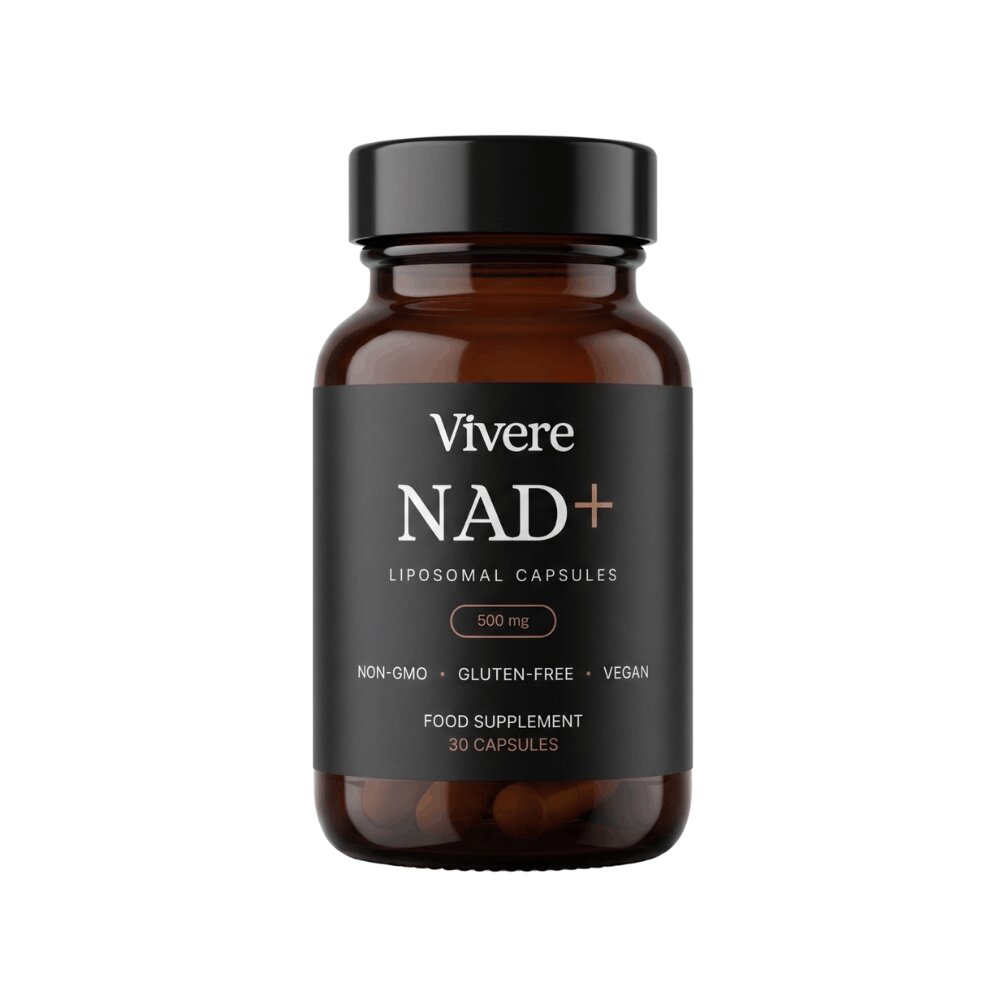
We built Vivere's high-strength liposomal NAD+ capsules against exactly the framework above, so you can hold them to the same five checks you would apply to anyone else. Here is how they map.
If you are looking for a more direct NAD+ supplementation route, such as injections, it is worth reading how NAD+ capsules and injection pens compare before you decide. Capsules are convenient for steady daily support and travel well, while injections deliver NAD+ more directly to the body.
You can check the full specification, certifications and current price on the NAD+ Liposomal Capsules product page.
Frequently asked questions
Do liposomal NAD+ capsules really work?
When they are properly encapsulated, liposomal NAD+ capsules are designed to protect the molecule from stomach acid and support absorption into the bloodstream, which plain capsules cannot do as well. Human evidence for oral NAD+ is still developing, so absorption-friendly delivery is the sensible choice. We look at this in depth in the evidence on whether liposomal NAD+ capsules work.
Is liposomal NAD+ better than NMN?
They work differently rather than one being strictly better. NMN is a precursor that your body must convert into NAD+, while liposomal NAD+ delivers the fully formed coenzyme to your body and skips the conversion step. NMN's novel food status in the UK is also currently unsettled, which is worth factoring into your choice.
When should I take liposomal NAD+ capsules?
Take it in the morning on an empty stomach. NAD+ is involved in energy production, so taking it earlier in the day may also align with your body's natural daily rhythm. Our full guide to how and when to take NAD+ capsules covers timing, food and stacking in more detail.
How much NAD+ should I take per day?
There is no single official recommended dose for NAD+ itself, so most people follow the product's directions. Vivere's capsules provide 500mg of beta-NAD+ once a day. If you are new to supplementing, start with the labelled dose and stay consistent.
Are NAD+ supplements safe, and are there side effects?
NAD+ capsules are generally well tolerated, though some people notice mild, short-lived effects such as slight nausea when they first start. If you take prescription medicines, are pregnant or breastfeeding, or have a health condition, check with your GP or pharmacist first. See our overview of NAD+ side effects and safety for the full picture.
Is NAD+ legal to buy in the UK?
Yes, NAD+ is sold as a food supplement in Great Britain. The regulatory grey area sits mainly with NMN, which is treated as a novel food without full authorisation. Our guide to which NAD+ ingredients are approved in the UK explains where each one stands.
Nutritionist's Corner: Final Thoughts
"If you take one thing from this guide, let it be that product quality is something you can assess for yourself rather than simply take on trust. Choosing a NAD+ supplement is not about selecting the product with the boldest claims. It is about looking carefully at the formulation, dosage, manufacturing standards and quality testing.
Consider whether the product clearly states its NAD+ form and dosage, how the formulation is designed to support stability and delivery, whether it is manufactured to appropriate quality standards and whether independent testing is available. These details can help you make a more informed decision about the product you choose.
I would always recommend choosing a well-made, compliant product and combining it with the fundamentals that support healthy NAD+ metabolism, including good sleep, regular physical activity and a balanced diet rich in whole foods, rather than spending more on a product making claims that are not yet supported by robust evidence. Get the fundamentals right, keep your expectations realistic and choose a formulation based on quality, transparency and evidence."
About the author. This guide was reviewed by Yusra Serdaroglu Aydin, MSc RD, Head of Nutrition at Vivere. It draws on NHS and Food Standards Agency guidance, the Great Britain Nutrition and Health Claims Register, and current peer-reviewed research into NAD+ and the science of how NAD+ supports the body.
This article is for general information and does not replace personalised advice from a qualified healthcare professional. Food supplements are not a substitute for a varied, balanced diet and a healthy lifestyle. If you are pregnant, breastfeeding, taking medication or managing a health condition, speak to your GP or pharmacist before starting any new supplement.
Sources and references
Key studies, trials and reviews
NAD+ precursor supplementation in human ageing: clinical evidence and challenges. Nature Metabolism, 2025. Finds that precursor supplements can raise circulating NAD+ in some trials, while functional benefits in humans remain limited and warrant larger studies.
Age-Dependent Decline of NAD+: Universal Truth or Confounded Consensus? Nutrients, 2022. A balanced appraisal of the evidence that NAD+ falls with age, noting variation between tissues and studies.
Further reading
Niacin (vitamin B3): what it does and how much you need. NHS. Niacin helps the body release energy from food; recommended daily amounts for adults aged 19 to 64 are 16.5mg for men and 13.2mg for women.
Great Britain Nutrition and Health Claims (NHC) Register. Department of Health and Social Care. Lists the authorised claims that niacin contributes to normal energy-yielding metabolism and to the reduction of tiredness and fatigue.
Longevity ingredients under the regulatory spotlight. NutraIngredients, 2026. Summarises that NR is authorised as a novel food up to 300mg per day, while NMN remains under novel food assessment and is not yet authorised. See also the EFSA safety opinion on beta-nicotinamide mononucleotide (2026).
Fatigue and tiredness (TATT). Patient (professional reference). Reports that tiredness is one of the most frequent presenting complaints in UK primary care, with 10 to 18 percent of people reporting tiredness or fatigue lasting a month or more.
ASA ruling on food supplement health claims. Advertising Standards Authority. Illustrates active enforcement against supplement claims that are not authorised or that imply medicinal effects.