NAD+ Capsules vs NAD+ Injections: Which Is Right for You?
Last Updated: 18 September 2026
In one sentence:
Choose NAD+ capsules for a convenient, needle-free daily routine that travels well, and choose NAD+ injections when you want the most direct, highest-bioavailability route and are comfortable with simple at-home subcutaneous dosing.
Nicotinamide Adenine Dinucleotide (NAD+) is a coenzyme found in every living cell, where it helps your mitochondria turn food into ATP, the energy your cells run on. Supplementing it sounds simple, but there is a catch: getting NAD+ into your bloodstream effectively depends on the delivery method you choose.
On benefits, it helps to be precise. Because NAD+ is related to the vitamin B3 (niacin) family, the authorised UK health claim is that niacin contributes to normal energy-yielding metabolism and the reduction of tiredness and fatigue.2 The NHS notes that niacin helps the body release energy from food.1 Beyond that, what differs between the two formats is not the promise; it is the delivery.
That is really what the capsules-versus-injections question comes down to. Both formats from Vivere deliver direct, fully formed NAD+, and both are made in the UK. They approach delivery in two different ways. This guide walks you through the differences so you can pick the format that fits your goals and your lifestyle.
Key Takeaways
Who are NAD+ capsules best for?
People who want a simple, needle-free daily routine. Vivere's capsules provide 500mg of direct beta-NAD+ per capsule, use liposomes and an enteric coating to protect the dose, need no refrigeration and travel easily.
Who are NAD+ injections best for?
People who want the most direct route and the highest bioavailability and are comfortable with simple at-home dosing. Vivere's injections deliver 1000mg of NAD+ per cartridge subcutaneously, bypassing digestion entirely.
Which format has higher bioavailability?
Injections. A subcutaneous injection bypasses the gut and first-pass metabolism, so more of the dose reaches your body. Capsules protect an oral dose instead, using a phospholipid bilayer and enteric coating.
Can you use both?
Yes. Many people combine them, using injections for a more intensive phase and keeping capsules for travel or in-between phases to stay consistent. Based on your needs and preferences, you can choose one or both.
Why does the delivery method matter?
The delivery method matters because NAD+ is a large, fragile molecule that does not survive digestion well. Taken as a plain oral dose, much of it is broken down by stomach acid and removed by first-pass metabolism in the liver before it reaches your systemic circulation. The route you choose decides how much of the dose actually arrives.
First-pass metabolism is the key idea. When you swallow a supplement, it is absorbed through the gut and passes through the liver first, which can remove a large share before it ever circulates. Injections given under the skin avoid this route, and clinical references on medication routes of administration explain that parenteral (injected) delivery generally reaches the bloodstream more completely than oral delivery.4 It is worth being honest that head-to-head human data directly comparing NAD+ formats is still limited, and a 2025 review in Nature Metabolism on NAD+ precursor supplementation in human ageing reports that supplements can raise circulating NAD+ while functional benefits in people remain limited.3
Vivere solves the absorption problem in two distinct ways:
Bypass the gut entirely. NAD+ injections deliver the coenzyme under the skin, so it does not have to survive digestion at all.
Protect the molecule. Liposomal capsules wrap the NAD+ in a protective fatty shell and an enteric coating so more of it survives the journey through the stomach.
NAD+ injections bypass the digestive system. Liposomal capsules use a phospholipid bilayer to survive stomach acid. Both deliver direct, fully formed NAD+, not a precursor your body has to convert first.
Vivere NAD+ Liposomal Capsules: the needle-free daily routine
Vivere's oral liposomal NAD+ capsules give you 500mg of direct beta-NAD+ per capsule in a simple once-a-day format. They are designed for people who want a consistent routine without needles or refrigeration.
How the capsules work
The capsules use a double protection design. Each NAD+ molecule is wrapped in a phospholipid bilayer (a liposome) that mimics your own cell membranes, and that is housed inside an enteric-coated capsule that only opens in the intestine rather than the stomach. Together, the coating gets the capsule past stomach acid, and the liposome helps carry the NAD+ across the digestive tract. You can read more about how liposomal NAD+ compares with standard oral NAD+ if you want the details.
Best for: simple daily maintenance, frequent travellers who do not want to manage refrigeration, and anyone who would rather take an oral supplement than use a needle. For a wider view of what to look for, see our guide on how to choose a liposomal NAD+ supplement.
Vivere NAD+ Injections: direct delivery and higher bioavailability
Vivere's NAD+ injection pens deliver 1000mg of NAD+ per cartridge through a subcutaneous self-administration pen kit. Because the dose goes in under the skin, it bypasses the digestive tract entirely, which is why injections are considered the more bioavailable route.
How the injections work
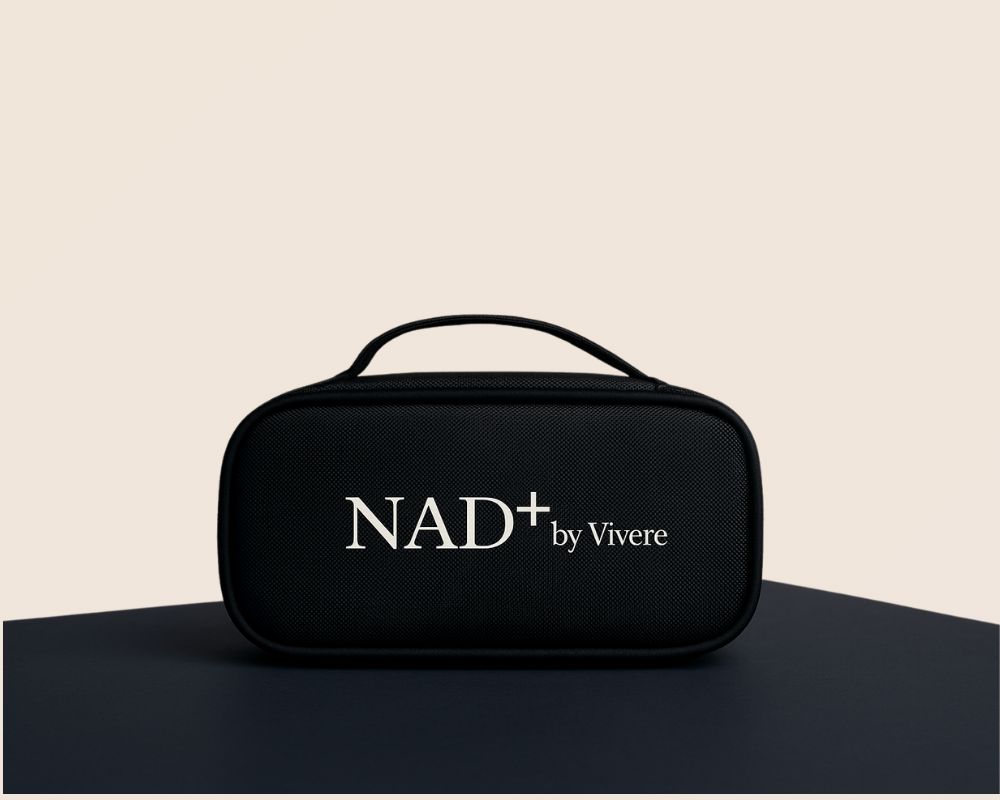
A subcutaneous injection places NAD+ into the tissue just beneath the skin, so it is absorbed into the systemic circulation rather than passing through the gut and liver first. The kit is designed for straightforward use at home and includes the injection pen, your 1000mg NAD+ cartridges, a travel case with a reusable cool pack, sterile needles, alcohol wipes and a sharps bin.
The routine and storage
Vivere's injection routine typically begins with a short loading phase of 3 daily doses, then moves to a maintenance phase of every other day. The cartridges need to be kept refrigerated, between 2°C and 8°C. A reusable cool pack is included for travel. Always follow the exact directions provided with your kit, as your schedule and storage guidance should come from the product instructions.
Best for: people who want a more intensive routine, those prioritising maximum bioavailability, and anyone comfortable with a simple, at-home self-injection process. If you are weighing injectable options, we also compare subcutaneous versus IV NAD+ separately.
Using injections safely. Self-injection is straightforward when you follow the instructions, but it is not right for everyone. Use a fresh sterile needle each time, dispose of needles in the sharps bin provided, and store the cartridges as directed. Speak to your GP or pharmacist first if you take prescription medicines, are pregnant or breastfeeding, or have a health condition.
Feature comparison: capsules vs injections
Here is how the two Vivere formats compare at a glance.
"There are different ways to supplement NAD+, and each comes with its own benefits while serving the same goal. The best format is the one that fits your lifestyle, that you’re happy to use and that you can be consistent with."
Can you combine capsules and injections?
Yes. Both deliver NAD+ via different routes. However, it is important to understand that both aim to support NAD+ levels in the body. Therefore, using them at the same time may not be necessary, but you can switch between them as part of your routine. You may choose to use the injection pen during your loading and maintenance phases, then switch to the liposomal capsules while travelling or on days when you prefer not to inject, allowing you to maintain your routine without needing to carry a cool bag.
If you want to explore either option, you can see full details, kit contents and current pricing on the NAD+ Liposomal Capsules and NAD+ injection kit pages.
A quick note on NMN. You will see NMN marketed alongside NAD+ products. NMN is a precursor that your body has to convert into NAD+, and its status as a novel food in Great Britain is currently unsettled and under assessment.5 Both Vivere formats give you direct, fully formed NAD+ instead, so there is no conversion to rely on.
Frequently asked questions
Do NAD+ injections work faster than capsules?
Injections take the more direct route. Because a subcutaneous injection bypasses the digestive system, more of the dose reaches your bloodstream, and it does so without the losses of digestion, which is why injections are considered the higher-bioavailability option. Individual experiences vary, so think in terms of absorption rather than a guaranteed sensation.
Are NAD+ injections safe to do at home?
Vivere's kit is designed for at-home subcutaneous self-administration and includes sterile needles, alcohol wipes and a sharps bin. Follow the instructions carefully, use a fresh needle each time and dispose of sharps safely. If you take medication, are pregnant or breastfeeding, or have a health condition, check with your GP or pharmacist first.
Do Vivere NAD+ capsules need to be kept in the fridge?
No. Unlike the injection cartridges, which need cold storage between 2°C and 8°C, the liposomal capsules are shelf-stable and can be kept in a cool, dry place out of direct sunlight. That makes them the easier option for travel.
Which has better bioavailability, capsules or injections?
Injections have the edge because they bypass digestion completely. Capsules are designed to protect an oral dose with liposomes and an enteric coating, so they are far more absorbable than plain NAD+ powder, but an oral route still cannot match a direct injection for bioavailability.
Is NAD+ the same as NMN?
No. NMN is a precursor your body converts into NAD+, whereas both Vivere formats deliver fully formed NAD+ directly. NMN also sits in an unsettled novel food position in the UK. Our guide to the differences between NAD+, NMN and NR explains this in full.
How should I take NAD+ capsules for the best results?
Take them once a day in the morning on an empty stomach, which supports absorption and fits your natural daily rhythm. Our guide on how and when to take NAD+ capsules covers timing and stacking in more detail.
Nutritionist's Corner: Final Thoughts
"When choosing between NAD+ capsules and injections, I always ask: which option can you consistently maintain? Injections offer a more direct delivery route, while capsules provide a convenient, needle-free option that fits easily into everyday life and travel. Ultimately, the best choice is the one that suits your lifestyle and supports consistency. Whichever format you choose, remember that supplements should complement, not replace, the foundations of good health, including quality sleep, regular movement and a balanced, whole-food diet."
About the author. This guide was reviewed by Yusra Serdaroglu Aydin, MSc RD, Head of Nutrition at Vivere. It draws on NHS and Food Standards Agency guidance, published pharmacology references and current research into how NAD+ supports the body.
This article is for general information and does not replace personalised advice from a qualified healthcare professional. Food supplements are not a substitute for a varied, balanced diet and a healthy lifestyle. Self-administered injections are not suitable for everyone. If you are pregnant, breastfeeding, taking medication or managing a health condition, speak to your GP or pharmacist before starting any new supplement or injection routine.
Sources and references
Key studies, trials and reviews
NAD+ precursor supplementation in human ageing: clinical evidence and challenges. Nature Metabolism, 2025. Notes that supplements can raise circulating NAD+ in some trials, while functional benefits in humans remain limited and need larger studies.
Medication Routes of Administration. StatPearls, NCBI Bookshelf. Explains how parenteral routes such as subcutaneous injection bypass first-pass metabolism, affecting how much of a dose reaches systemic circulation.
Further reading
Niacin (vitamin B3): what it does and how much you need. NHS. Niacin helps the body release energy from food; recommended daily amounts for adults aged 19 to 64 are 16.5mg for men and 13.2mg for women.
Great Britain Nutrition and Health Claims (NHC) Register. Department of Health and Social Care. Lists the authorised claims that niacin contributes to normal energy-yielding metabolism and to the reduction of tiredness and fatigue.
Longevity ingredients under the regulatory spotlight. NutraIngredients, 2026. Summarises that NMN remains under novel food assessment and is not yet authorised, while NR is authorised up to 300mg per day.
Author

Yusra Serdaroglu Aydin, MSc RD
Head of Nutrition and Registered Dietitian
Yusra is a nutritionist with a multidisciplinary background in nutrition, food engineering, and culinary arts. During her education, her curiosity abo...