Brain Fog and Hot Flushes: Can NAD+ Help During Menopause?
Last Updated: 28 April 2026

Can NAD+ help with menopause symptoms? Yes, boosting NAD+ levels can combat the "energy crash" caused by hormonal decline. As oestrogen levels drop, your mitochondria (cellular batteries) lose one of their protector, leading to fatigue and brain fog [1]. Replenishing NAD+ provides support for your cells’ energy processes, helping them function optimally even as hormone levels change.
Key Takeaways
The Oestrogen-Energy Link: Oestrogen protects your energy production. When it leaves, you need a backup plan.
Banishing Brain Fog: NAD+ supports the pathways that help brain cells function efficiently during hormonal shifts.
Thermal Regulation: Can help the body manage hot flushes better.
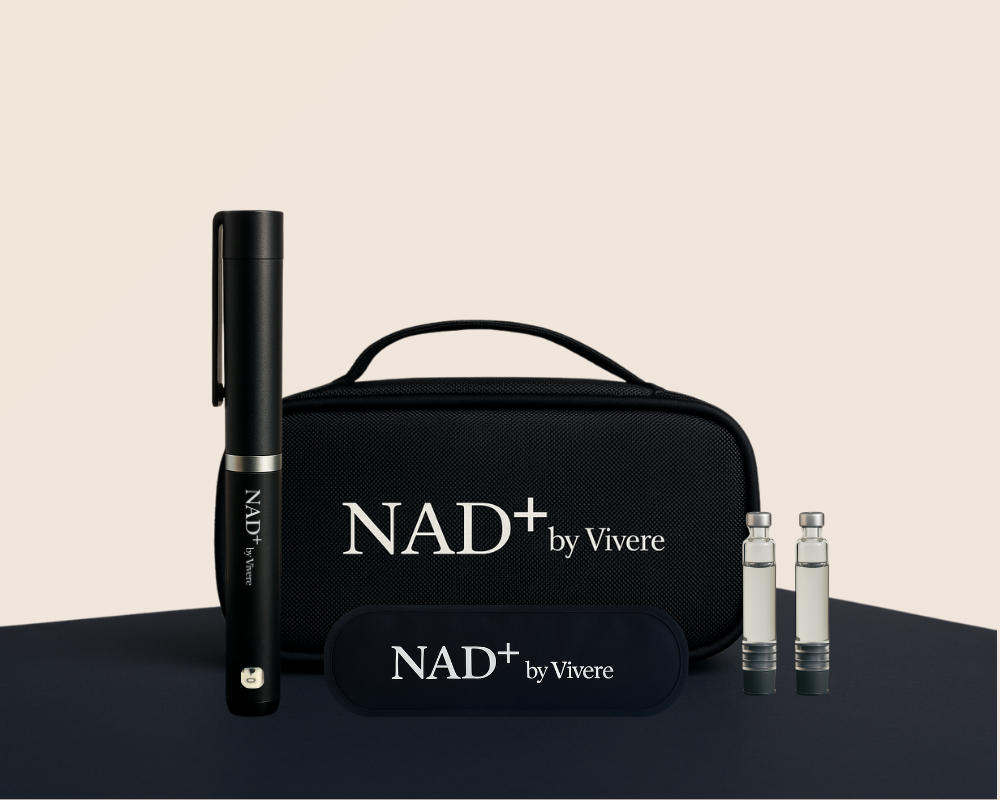
Why Menopause Feels Like a Power Cut
Many women describe menopause not just as "the end of periods," but as a sudden power outage.
You might feel fine one day, and the next, you are exhausted, foggy and overheating.
This happens because oestrogen is not just a sex hormone. It helps your cells use energy efficiently. When oestrogen levels drop during perimenopause, metabolism can slow.
Brain Fog: The "Walking into a Room" Syndrome
We have all been there. You walk into the kitchen and completely forget why.
This is often dismissed as "baby brain" or "menopause brain," but it is actually an energy crisis [2].
Your brain consumes 20% of your body’s energy. When your mitochondrial function dips due to hormonal changes, your brain is the first to suffer. It rations energy, shutting down tasks like short-term memory or sharp focus.
Hot Flushes and "Thermal Chaos"
Hot flushes are your body’s thermostat breaking down. The medical term is vasomotor instability. Your brain thinks you are overheating and panics by dilating blood vessels.
You Are Not "Just Getting Old"
Society tells women that exhaustion and brain fog are just part of the package.
The science disagrees.
These symptoms involve multiple factors, including changes in hormones and cellular energy. While you cannot stop the drop in oestrogen, you can change how your cells react to it by supplementing NAD+.
Nutritionist's Corner: Final Thoughts
"The shift during menopause is profound. As oestrogen declines, mitochondrial efficiency drops, leading to the classic 'brain fog' and fatigue. While NAD+ is not a hormone, it supports the pathways that struggle during this transition, offering a non-hormonal tool to help women regain cognitive clarity and energy stability."
Sources
[1] Menopause and cognitive impairment: A narrative review of current knowledge - PMC
[2] Perimenopause and emergence of an Alzheimer's bioenergetic phenotype in brain and periphery - PubMed
Author

Yusra Serdaroglu Aydin, MSc RD
Head of Nutrition and Registered Dietitian
Yusra is a nutritionist with a multidisciplinary background in nutrition, food engineering, and culinary arts. During her education, her curiosity abo...