Liposomal NAD+
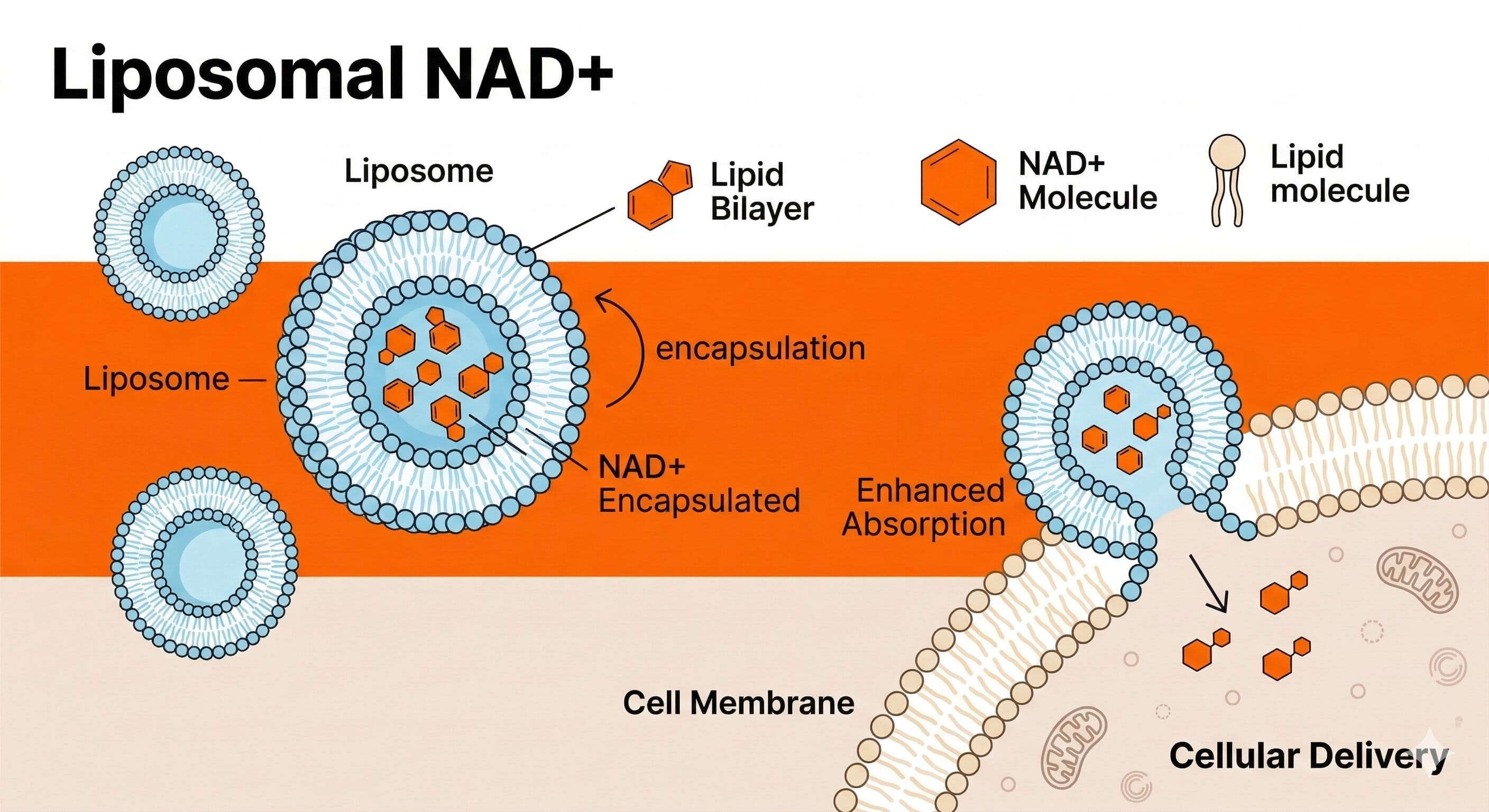
Liposomal NAD+ is an advanced dietary supplement that delivers the vital cellular coenzyme Nicotinamide Adenine Dinucleotide (NAD+) inside a protective microscopic fat bubble known as a liposome. This specialised delivery method shields the fragile NAD+ molecule from the harsh acidic environment of your stomach, allowing it to pass safely into your intestines and directly into your bloodstream. By significantly improving bioavailability, liposomal technology ensures that your body actually absorbs and utilises the compound to support energy production and cellular repair.
The Role of NAD+ in Cellular Energy
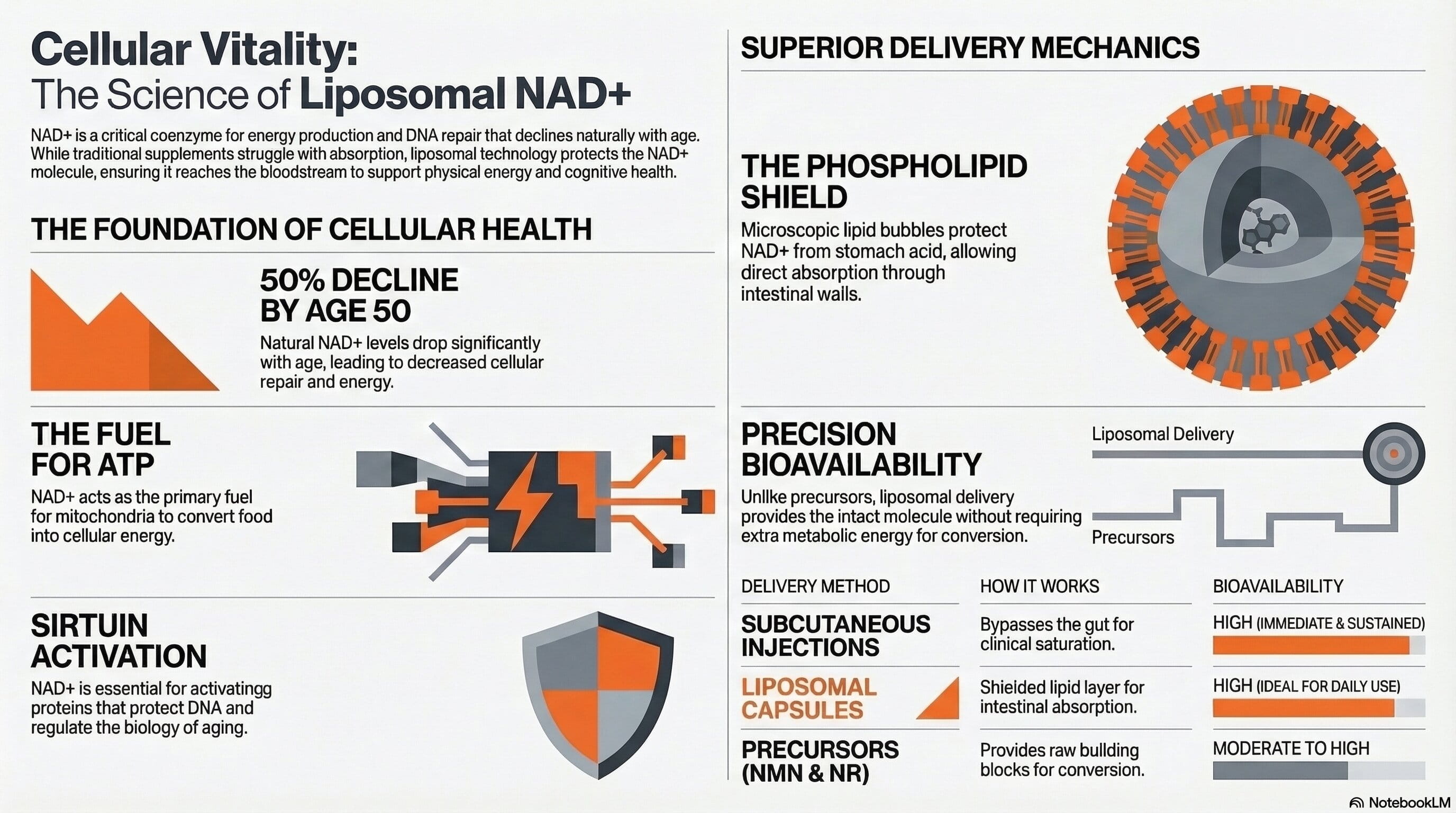
Nicotinamide Adenine Dinucleotide is a naturally occurring coenzyme found in every living cell in your body, acting as the fundamental fuel for your mitochondria. Mitochondria are the powerhouses of your cells, and they absolutely rely on NAD+ to convert the food you eat into ATP (adenosine triphosphate), which is the primary energy currency your body uses to function.
Beyond energy metabolism, NAD+ is also essential for activating sirtuins[1]. Sirtuins are a family of proteins that regulate cellular health, protect your DNA from damage, and play a crucial role in the biology of ageing. Unfortunately, natural NAD+ levels decline significantly as we age[2], often dropping by up to 50% by the time we reach our fifties. With fatigue consistently ranking as one of the most common reasons for GP visits in the UK, restoring these levels has become a major focus in nutritional science.
Why the Liposomal Delivery Method Matters
Standard NAD+ supplements are notoriously ineffective because the raw molecule is highly unstable and easily destroyed by digestion before it can ever reach your cells. Liposomal delivery solves this problem by encasing the active ingredient in a double layer of phospholipids[3]. These phospholipids are made of the exact same material as your own cell membranes.
Because the body recognises these lipid spheres as friendly, they can seamlessly merge with your intestinal walls and deliver the intact NAD+ directly into your systemic circulation. This bypasses the typical digestive degradation that ruins standard oral supplements.
Comparing Delivery Methods: Liposomal, Precursors, and Injections
Because the NAD+ molecule is so fragile, how it enters your body is just as important as the dosage. You generally have four main options for boosting your levels, ranging from daily oral supplements to clinical therapies. For those seeking maximum bioavailability and efficiency, subcutaneous NAD+ injections (administered into the fatty tissue just beneath the skin) deliver the coenzyme directly into your system, bypassing the digestive tract entirely for near-total absorption and a steady release.
While subcutaneous injections are excellent for an immediate, potent, and sustained clinical boost, highly bioavailable liposomal capsules are ideal for maintaining those elevated levels daily at home. You may also see precursor supplements like NMN (Nicotinamide Mononucleotide) or NR (Nicotinamide Riboside)[4].
The table below explains the key differences across all delivery methods.
| Delivery Method | How It Works in the Body | Bioavailability Profile |
|---|---|---|
| Subcutaneous NAD+ Injections | Administered just beneath the skin, completely bypassing the harsh environment of the gut for a steady, controlled release into the bloodstream. | High. Provides highly effective, immediate, and sustained cellular saturation. |
| Liposomal NAD+ Capsules | Provides the intact molecule shielded by a microscopic lipid layer for safe, direct absorption through the intestinal wall. | High. Safely navigates stomach acid to enter the bloodstream efficiently. Ideal for daily maintenance. |
| Precursors (NMN & NR) | Provides the raw building blocks; your body must expend energy to chemically convert them into usable NAD+. | Moderate to high. They survive digestion better than standard NAD+ but require extra metabolic steps to convert.[5] |
| Standard Oral NAD+ | Provides the complete molecule directly via a standard pill or powder, but it is broken down rapidly by stomach acid. | Very low. The vast majority of the active compound is destroyed before it can reach your cells. |
Potential Health Benefits of Restoring NAD+
Maintaining optimal levels of this coenzyme through highly bioavailable methods like liposomal delivery is linked to a variety of systemic health benefits, particularly for older adults experiencing the natural decline of cellular function.
- Enhanced Physical Energy: By directly supporting mitochondrial function, it helps combat chronic fatigue and improves physical stamina[6].
- Cognitive Support: The brain requires massive amounts of ATP to function. Supporting this energy pathway can help clear brain fog and support memory retention[7].
- Healthy Ageing: By providing the fuel needed for sirtuins to repair DNA, it supports resilience against age related cellular damage.
- Metabolic Health: It assists in the efficient breakdown of carbohydrates and fats, supporting healthy blood sugar regulation and weight management.
Nutritionist's Corner: Final Thoughts
'Cellular energy is the foundation of all human health. When your mitochondria are starved of NAD+, every system in your body slows down, leading to the sluggishness and cognitive fog many people simply accept as a normal part of getting older. While I always advocate for a food first approach by ensuring adequate intake of Vitamin B3 (niacin) from foods like poultry, mushrooms, and avocados, the clinical reality is that diet alone cannot always overcome the sharp age related decline in NAD+. In these cases, a high quality liposomal NAD+ supplement offers a highly efficient, targeted way to bypass digestive barriers and supply your cells with the precise coenzyme they need to thrive and repair.'
- Yusra Serdaroglu Aydin, MSc RD
References
Author

Yusra Serdaroglu Aydin, MSc RD
Head of Nutrition and Registered Dietitian
Yusra is a nutritionist with a multidisciplinary background in nutrition, food engineering, and culinary arts. During her education, her curiosity abo...